
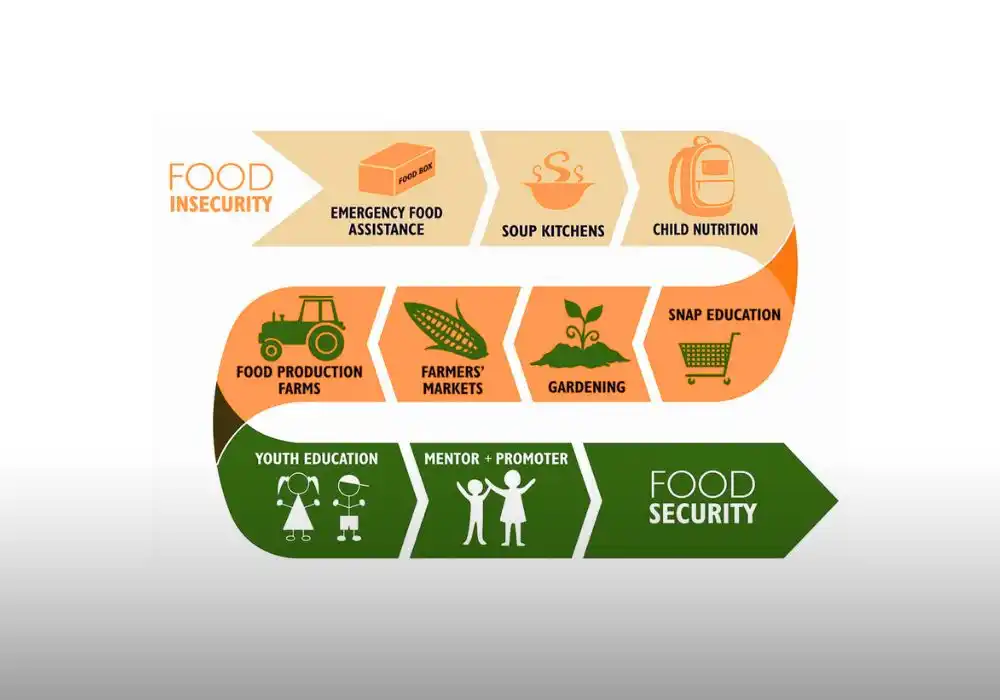
Understanding India’s Food Security Framework
In a significant move aimed at fortifying India’s vast food security architecture, the Department of Food and Public Distribution (DFPD) recently formalized a Memorandum of Understanding (MoU) with the Food Corporation of India (FCI) in New Delhi. This agreement, a critical step highlighted by the Ministry of Consumer Affairs, Food and Public Distribution, is not just another bureaucratic formality but a strategic initiative designed to inject greater efficiency and accountability into the nation’s food grain management system. For aspirants preparing for competitive examinations like UPSC, SSC, PSC, NID, NIFT, and other government recruitment tests, understanding the nuances of such agreements is paramount, as they often form the bedrock of current affairs and governance-related questions.
What Does This MoU Entail?
At its core, this Memorandum of Understanding serves as a blueprint, meticulously outlining specific performance parameters and setting ambitious goals for the Food Corporation of India. The objective is clear: to streamline operations from procurement to storage and distribution, ensuring that food grains reach the deserving beneficiaries with minimal leakage and maximum impact. This includes defining key performance indicators (KPIs) related to storage capacity utilization, reduction in transit and storage losses, timely delivery of food grains, and overall operational transparency. It’s an institutionalized commitment to continuous improvement, moving beyond ad-hoc measures to a structured approach for enhancing the entire supply chain of food grains.
Why is This Agreement So Important?
The ‘why’ behind this MoU is rooted in the complex challenges of managing one of the world’s largest public distribution systems. India, with its enormous population, relies heavily on a robust food security mechanism to ensure no citizen goes hungry.
Enhancing Efficiency: The MoU aims to cut down on inefficiencies that often plague large-scale operations. By setting clear targets, FCI will be nudged towards adopting better logistics, modern storage techniques, and optimized distribution channels. This translates to quicker movement of grains from farms to godowns and then to fair price shops, especially critical during emergencies or periods of high demand.
Ensuring Accountability: A major thrust of the agreement is on bringing in higher levels of accountability. Defined parameters mean that FCI’s performance can be objectively measured against pre-set benchmarks. This fosters a culture of responsibility, where deviations from targets can be identified and addressed promptly, ultimately serving the public better.
Strengthening Food Security: At a macro level, an efficient and accountable food grain management system directly strengthens India’s food security. It ensures a stable supply of staple foods, stabilizes prices, and supports the Public Distribution System (PDS) effectively, thereby safeguarding vulnerable populations against hunger and malnutrition. This is a direct linkage to India’s commitment to Sustainable Development Goals (SDGs), particularly SDG 2: Zero Hunger.
Optimizing Public Resources: By reducing losses in storage and transit, and by streamlining operations, the MoU also aims at more judicious use of public funds allocated for food subsidies and procurement. Every grain saved and every operational cost reduced means more resources can be diverted to other critical development areas.
Key Players: DFPD and FCI – A Brief Overview
To fully grasp the significance, it’s vital to understand the roles of the entities involved:
Department of Food and Public Distribution (DFPD): This department, under the Ministry of Consumer Affairs, Food and Public Distribution, is the nodal agency for formulating national policies on food grains, including procurement, storage, distribution, and pricing. It essentially sets the strategic direction and oversees the implementation of various schemes like the National Food Security Act.
Food Corporation of India (FCI): Established in 1965, FCI is a statutory body and the primary agency responsible for the procurement, storage, and distribution of food grains under the PDS. It acts as the operational arm for the government’s food policies, ensuring minimum support price (MSP) for farmers and providing food security to consumers.
This MoU, therefore, represents a synchronized effort between the policymaking body (DFPD) and its main implementing agency (FCI) to work in unison towards a common, enhanced objective.
Relevance for Government Exam Aspirants
For those preparing for UPSC Civil Services, SSC CGL, State PSCs, or any other government examination, this development is a rich source of information. It falls under several important subject areas:
* Current Affairs: Directly relevant as a recent policy development.
* Indian Economy: Concepts like food inflation, buffer stock management, subsidies, and the role of public sector enterprises (FCI).
* Governance and Public Administration: Focuses on accountability, efficiency, policy implementation, and inter-departmental coordination.
* Social Justice: Linkages to food security, poverty alleviation, and welfare schemes like PDS.
* Essay Writing: Provides excellent contemporary examples for topics on food security, governance challenges, and agricultural reforms.
Candidates should analyze such MoUs not just as standalone news items but as reflections of broader government priorities and systemic reforms. Understanding the ‘why,’ ‘what,’ and ‘how’ empowers you to answer descriptive questions, tackle multiple-choice questions with confidence, and articulate well-informed arguments in your essays.
Frequently Asked Questions (FAQs)
1. What is the primary purpose of the MoU signed between the Department of Food and Public Distribution (DFPD) and the Food Corporation of India (FCI)?
The primary purpose of this Memorandum of Understanding is to establish clear performance parameters and set specific goals for the Food Corporation of India, with the aim of significantly enhancing efficiency and ensuring greater accountability in India’s food grain management system. This ensures better procurement, storage, and distribution.
2. Who are the key parties involved in signing this important agreement?
The two main entities involved in signing this crucial agreement are the Department of Food and Public Distribution (DFPD), which operates under the Ministry of Consumer Affairs, Food and Public Distribution, and the Food Corporation of India (FCI), which is the principal public sector undertaking responsible for food grain management.
3. How does this MoU specifically aim to improve food grain management in India?
This MoU aims to improve food grain management by setting measurable benchmarks for FCI across its operations, including better utilization of storage capacity, reduction of wastages during transit and storage, timely delivery of food grains, and increasing transparency in its overall functioning. This structured approach helps in identifying and rectifying operational bottlenecks.
4. Why is the Food Corporation of India (FCI) considered crucial for India’s food security?
FCI is crucial for India’s food security because it is the government’s primary agency for procuring food grains at Minimum Support Price (MSP) from farmers, maintaining buffer stocks to stabilize market prices, and distributing these grains through the Public Distribution System (PDS) to ensure food availability for vulnerable sections of the population across the nation.
5. How can candidates preparing for various government examinations leverage information about such MoUs?
Candidates can leverage information about such MoUs by integrating it into multiple aspects of their exam preparation. It serves as valuable current affairs knowledge, provides practical examples for topics in Indian Economy and Governance, offers specific details for questions on public policy and food security, and can be used to enrich arguments in essay writing for exams like UPSC, SSC, and PSCs.





