
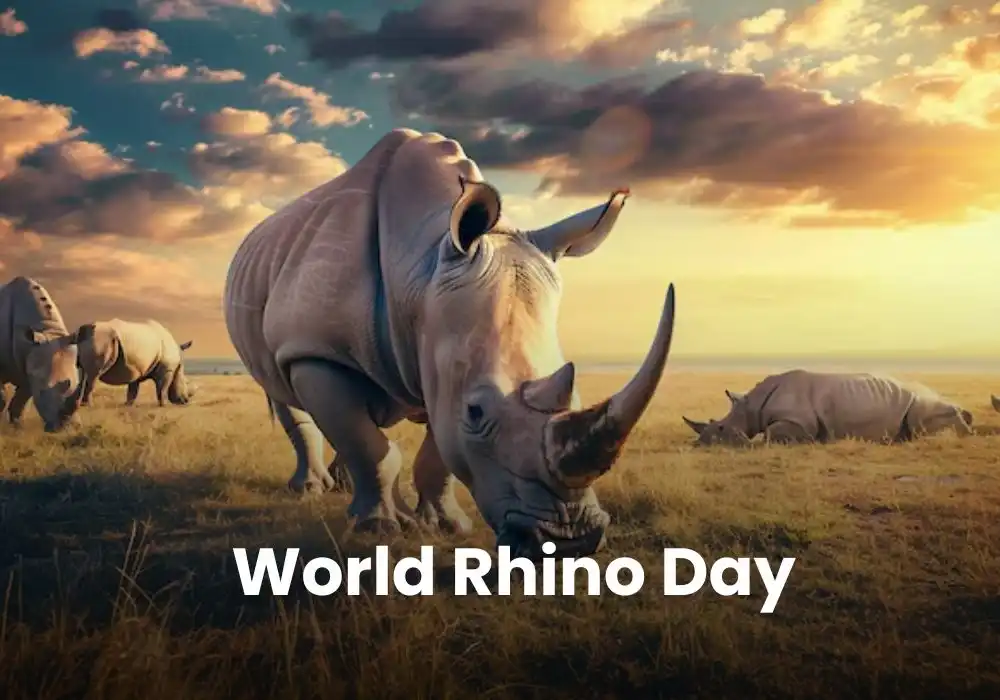
The Global Call for Rhino Conservation
Every year, the 22nd of September marks a pivotal moment on the global calendar: World Rhino Day. This significant observance serves as a powerful reminder of the urgent necessity to protect one of Earth’s most ancient and magnificent creatures, the rhinoceros. For aspirants of competitive examinations like UPSC, SSC, PSC, NID, NIFT, and other government roles, understanding World Rhino Day goes beyond mere awareness; it’s a crucial topic that frequently appears in Current Affairs, General Knowledge, Environment, and Biodiversity sections. This day unites international bodies, non-governmental organizations, and local communities in a concerted effort to safeguard all five species of rhinos from the brink of extinction.
Understanding the Rhino Crisis: Threats and Ecological Importance
Rhinos, despite their imposing stature and symbolic strength, are under severe threat. The primary dangers they face include rampant poaching driven by illegal wildlife trade for their horns, extensive habitat loss due to human encroachment and development, and escalating human-wildlife conflict. These majestic animals play a vital role in their ecosystems as large herbivores, influencing plant communities and overall biodiversity. Losing them would have cascading effects on the natural world. Recognizing these threats and the ecological significance of rhinos is fundamental for anyone preparing for exams that test environmental awareness and conservation efforts. Understanding the specific challenges faced by different rhino species (Black, White, Indian One-Horned, Sumatran, and Javan) adds depth to your knowledge base.
The Genesis of a Global Movement: A Brief History
The concept of World Rhino Day originated in 2010 when WWF-South Africa announced it. This initiative quickly gained global momentum, becoming an annual event by 2011, thanks to the collective efforts of various conservation organizations. Its establishment underscores a global commitment to tackling the complex challenges of rhino protection. The day serves as a platform to celebrate rhinos, raise funds for conservation, and debunk myths surrounding rhino horn, which has no proven medicinal value. Staying updated on the historical context and the evolution of such global observances is key for current affairs segments of your examinations.
India’s Stewardship: Project Rhino and the Success Story of Kaziranga National Park
India plays a remarkably significant role in rhino conservation, particularly as the home to the majority of the world’s Great One-Horned Rhinos. Efforts like ‘Project Rhino,’ which encompasses various government and non-governmental initiatives, demonstrate a dedicated approach to protecting these magnificent creatures. These projects often involve anti-poaching measures, habitat management, community engagement, and scientific research.
A shining example of successful rhino conservation within India is the renowned Kaziranga National Park in Assam. This UNESCO World Heritage Site is a fortress for the Indian rhino, boasting the largest population globally. The park’s success story is a testament to rigorous conservation strategies, including stringent anti-poaching patrols, habitat restoration, and sustained governmental support. Understanding the unique geographical features and conservation policies implemented in places like Kaziranga is invaluable for General Knowledge and Environment sections of exams, especially those focusing on Indian geography and wildlife. The challenges faced here, such as annual floods, also provide excellent case study material.
Connecting the Dots: World Rhino Day in Your Exam Preparation
For aspirants, World Rhino Day is more than just a date; it’s a comprehensive topic that can be integrated into various exam components.
* Current Affairs: Dates, latest conservation news, recent poaching incidents, new initiatives, international agreements (like CITES) related to wildlife trade.
* General Knowledge: Species identification, national parks and sanctuaries (e.g., Kaziranga, Manas National Park), geographical distribution, key conservation organizations, and government policies.
* Environment & Ecology: Biodiversity importance, endangered species status (IUCN Red List categories), human-wildlife conflict resolution, ecological roles, and habitat conservation.
* Essay Writing/Descriptive Tests: Topics on wildlife conservation, sustainable development, ethical tourism, and the role of communities in protection.
By delving into the ‘why,’ ‘what,’ ‘where,’ ‘when,’ and ‘how’ of World Rhino Day, you not only enrich your understanding of a critical global issue but also arm yourself with robust knowledge crucial for excelling in competitive examinations. Staying informed on such observances equips you with a holistic perspective on environmental challenges and solutions, demonstrating a well-rounded and analytical mind.
Frequently Asked Questions (FAQs)
Q1: When is World Rhino Day observed globally and why is it particularly important for competitive exam preparation?
A1: World Rhino Day is observed annually on September 22nd. It’s crucial for competitive exams because it frequently features in Current Affairs, General Knowledge, and Environment sections. Questions can range from its date and purpose to specific rhino species, conservation efforts, and key national parks like Kaziranga, making it a comprehensive topic for evaluation.
Q2: What are the primary threats that rhinos currently face worldwide, and how do these issues connect to broader environmental studies?
A2: Rhinos primarily face severe threats from poaching for their horns, extensive habitat loss due to human expansion, and increasing human-wildlife conflict. These issues are directly linked to broader environmental studies, highlighting topics such as biodiversity loss, illegal wildlife trade, deforestation, climate change impacts on ecosystems, and sustainable development challenges.
Q3: What is the significance of Kaziranga National Park in India concerning rhino conservation efforts?
A3: Kaziranga National Park in Assam, India, is globally significant as it hosts the largest population of the Great One-Horned Rhino. It is a UNESCO World Heritage Site and a prime example of successful conservation strategies, including stringent anti-poaching measures, habitat management, and community involvement. Its success story is a vital case study for environment and geography segments in exams.
Q4: How many distinct species of rhinos exist globally, and which one is predominantly found in India?
A4: There are five distinct species of rhinos worldwide: the Black Rhino, White Rhino, Sumatran Rhino, Javan Rhino, and the Great One-Horned Rhino (also known as the Indian Rhino). In India, the Great One-Horned Rhino is predominantly found, particularly in the northeastern states like Assam.
Q5: What role do initiatives often referred to as ‘Project Rhino’ play in protecting these endangered species?
A5: Initiatives collectively termed ‘Project Rhino’ refer to various collaborative efforts by governments, NGOs, and local communities aimed at rhino conservation. These projects typically encompass anti-poaching patrols, habitat preservation and restoration, community engagement and awareness programs, scientific research, and securing vital corridors for rhino movement, all crucial for preventing their extinction.





