
Unlocking India’s Maritime Legacy at Lothal: A New Chapter in History
India, a land blessed with a sprawling coastline and a history of seafaring that dates back millennia, is now poised to bring its glorious maritime past to the forefront. At the ancient Harappan port city of Lothal in Gujarat, a monumental project is underway: the National Maritime Heritage Complex (NMHC). This isn’t just about preserving relics; it’s about reconstructing a vivid narrative of India’s relationship with the seas, offering invaluable insights for anyone preparing for competitive examinations like UPSC, SSC, PSC, NID, NIFT, and other government roles. Understanding this initiative transcends mere headlines; it delves into history, culture, and strategic foresight, all crucial for your comprehensive exam preparation. Enhance your knowledge with our curated daily news analysis for GK.
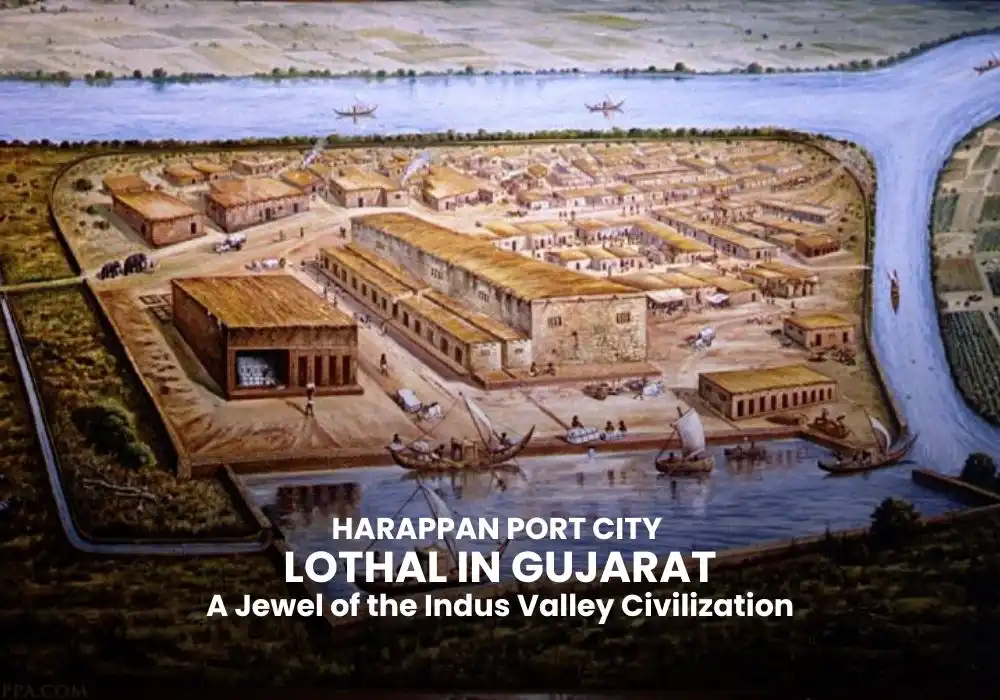
Lothal: A Jewel of the Indus Valley Civilization
To truly grasp the immense importance of the NMHC, one must first understand Lothal itself. Discovered in 1954, Lothal stands as one of the most significant archaeological sites of the Indus Valley Civilization, dating back to 2400 BCE. Situated strategically at the head of the Gulf of Khambhat, Lothal was not merely a settlement; it was a bustling ancient port, a vital hub for trade and commerce that connected the Harappan civilization with distant lands like Mesopotamia and Egypt. Evidence of sophisticated dockyards, scientifically planned warehouses, bead-making factories, and advanced town planning found here paints a vivid picture of a highly organized and prosperous society. For current affairs and static general knowledge sections of your competitive exams, remembering Lothal’s undisputed role as one of the world’s earliest known port cities and its profound connection to the Harappan era is absolutely crucial. Its very existence challenges earlier perceptions of ancient Indian isolation and highlights its active role in global trade networks.
The Vision: What is the National Maritime Heritage Complex?
The National Maritime Heritage Complex is envisioned as a world-class destination dedicated to celebrating India’s incredibly diverse maritime history and heritage. More than just a static museum, it’s designed to be an immersive educational and cultural experience, attracting both scholars and the general public. Imagine state-of-the-art galleries showcasing artifacts from ancient times to the modern era, a dedicated maritime museum, a lighthouse museum offering panoramic views of historical navigation, heritage theme parks that bring history to life, and even naval exhibition galleries celebrating India’s modern naval prowess. The complex aims to highlight everything from ancient shipbuilding techniques, the construction of world-renowned docks, and navigational prowess that enabled oceanic voyages, to the critical role of maritime trade in shaping Indian culture, economy, and geopolitical influence. Its primary objective is to educate, inspire, and foster a deeper appreciation for India’s seafaring legacy among its citizens, including future administrators and leaders who will emerge from your ranks.
Why Lothal? The Perfect Anchorage for Heritage
The choice of Lothal as the location for such an ambitious and nationally significant complex is no accident, but a profoundly symbolic and strategic decision. It serves as a powerful testament to the continuity and resilience of India’s maritime tradition over millennia. By establishing the NMHC at the very site of one of the world’s oldest known port cities, the project establishes a direct, tangible link between our ancient past and our contemporary aspirations for a vibrant “blue economy.” It visually and intellectually reinforces the profound historical roots of India’s engagement with the oceans and its immense potential for future growth. Understanding this strategic placement and its rich historical context is a prime example of the interdisciplinary knowledge often tested in UPSC and other civil services examinations, where a holistic perspective is highly valued.
Connecting the Dots for Your Exam Success
For aspirants diligently targeting SSC, UPSC, PSC, NID, NIFT, and various other government examinations, developments like the National Maritime Heritage Complex at Lothal offer a wealth of examinable material that cuts across multiple subjects. This topic covers multiple critical facets: it’s a significant current affairs development that speaks to national development, a crucial point in ancient Indian history and archaeology (forming part of Static General Knowledge), a prime example of cultural heritage preservation, and a glimpse into India’s economic and strategic future as a maritime power. Questions could range from the specific historical significance of Lothal, the purpose and key features of the NMHC, to its broader implications for India’s global standing and its role in maritime trade routes. Staying comprehensively updated on such national initiatives demonstrates a well-rounded understanding and analytical capability essential for success in competitive examinations. Our platform offers essential daily current affairs practice questions for all aspirants.
Frequently Asked Questions (FAQs)
1. What is the National Maritime Heritage Complex (NMHC)?
The National Maritime Heritage Complex is a world-class facility currently being developed at Lothal, Gujarat, dedicated to preserving, showcasing, and celebrating India’s rich and diverse maritime history, culture, and heritage through various museums, galleries, theme parks, and educational experiences.
2. Why is Lothal chosen as the site for the NMHC?
Lothal was chosen because it is one of the most significant archaeological sites of the Indus Valley Civilization, renowned for having one of the world’s earliest known dockyards and serving as a crucial ancient port city. This location profoundly connects India’s deep maritime past with its future aspirations as a maritime nation.
3. What is the historical significance of Lothal?
Lothal, dating back to 2400 BCE, was a prominent port city of the Harappan civilization. It played a vital role in trade with other ancient civilizations like Mesopotamia, demonstrating advanced town planning, sophisticated engineering, and a vibrant maritime economy, making it a key site for understanding ancient India’s global connections.
4. How does the NMHC benefit India?
The NMHC will serve as a significant educational and cultural hub, boosting tourism, creating widespread awareness about India’s historical maritime prowess, inspiring future generations to explore marine careers, and reinforcing the nation’s profound historical connection to the seas. It also supports the vision of a “blue economy” and strengthens India’s cultural diplomacy on the global stage.
5. Is information about the NMHC important for competitive exams?
Absolutely. Topics like the NMHC and the historical context of Lothal are highly relevant and frequently tested in competitive examinations such as UPSC, SSC, PSC, NID, NIFT, and other government examinations. They encompass critical aspects of current affairs, ancient history (Static GK), cultural heritage, and economic development, providing a holistic understanding expected from serious aspirants.





