
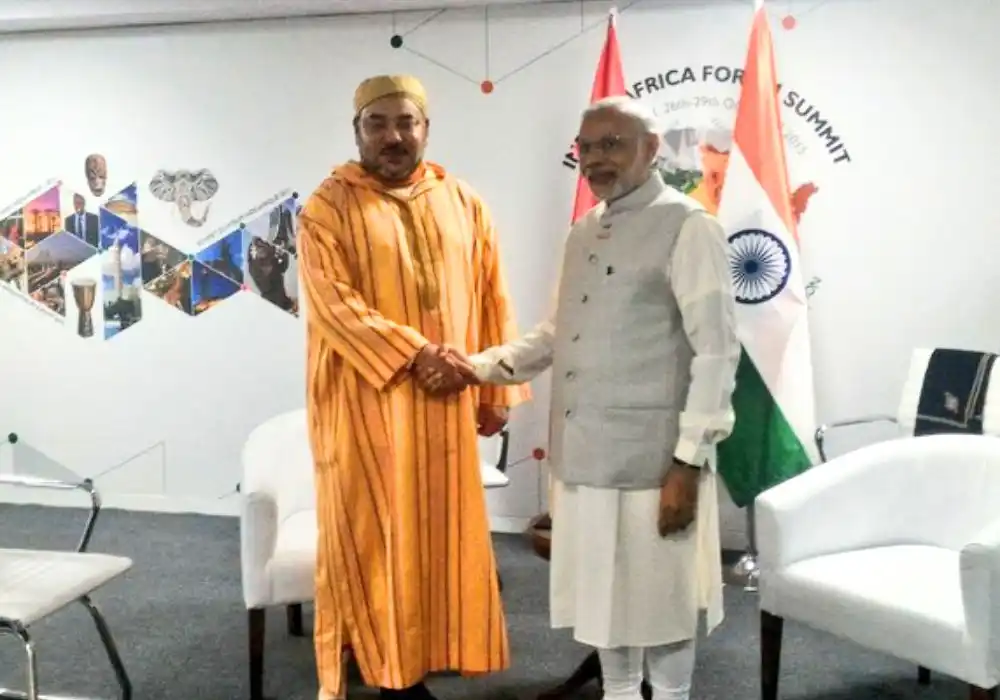
Beyond the Headlines: Why Global Events Shape Your Exam Success
Every day, the world offers a tapestry of events that go far beyond mere news snippets. For ambitious aspirants targeting examinations like UPSC, SSC, PSC, NID, NIFT, and other pivotal government roles, these events are not just current affairs; they are integral components of Static General Knowledge, International Relations, and even Economic Diplomacy. Understanding the “why,” “what,” and “how” behind global engagements is crucial, transforming isolated facts into a coherent, exam-ready knowledge base. A high-profile visit, such as an Indian Defence Minister’s trip to a nation like Morocco, serves as an excellent case study to illustrate these interconnected learning opportunities. These interactions highlight evolving geopolitical dynamics, economic partnerships, and strategic convergences that are frequently tested in diverse competitive examinations. Prepare for current affairs sections by taking our daily current affairs quiz for UPSC and SSC.
India-Morocco: A Deepening Strategic Partnership
India’s engagement with the North African nation of Morocco is a testament to its expanding diplomatic outreach and a key area of study for international relations. Historically, both nations share a rich legacy of cultural exchange and diplomatic ties, which have evolved into a robust modern partnership. Over the past few decades, bilateral relations have witnessed significant growth, encompassing political dialogues, economic collaboration, and cultural exchanges. These interactions are not incidental; they reflect a conscious effort by both countries to foster mutual understanding and strategic alignment across various sectors. For instance, the growing exchange of high-level visits, including those by key ministerial figures, underscores the increasing importance each nation places on this relationship.
Strategic Convergence: Defence and Economic Linkages
The deepening bond between India and Morocco extends significantly into the realms of defence cooperation and economic collaboration. Defence diplomacy plays a vital role in India’s foreign policy, aiming to build trust, enhance interoperability, and foster a stable global environment. When a Defence Minister undertakes a visit to a nation like Morocco, it signals a strategic intent to explore new avenues for defence exchanges, technology transfer, and collaborative ventures. This strategic convergence is often underpinned by economic interests, where defence-related industries find opportunities for investment and manufacturing. For example, India’s private sector, through entities like Tata Advanced Systems, has established manufacturing presences in Morocco, indicative of the growing confidence and potential for industrial collaboration. Such initiatives not only boost the local economy but also strengthen the overall strategic partnership, offering a clear example of how economic and defence objectives often intertwine. These collaborations provide valuable insights into India’s ‘Act Africa’ policy and its broader geopolitical strategies, which are frequently topics in examinations.
Morocco’s Pivotal Role: A Geopolitical Perspective
Morocco, strategically located at the crossroads of North Africa, the Middle East, and Europe, holds significant geopolitical importance. Its geographical position offers access to critical maritime routes and serves as a gateway to the broader African continent and the Atlantic. Understanding Morocco’s regional influence and its relationships with other global powers is essential for comprehending the wider international landscape. For exam aspirants, studying countries like Morocco involves more than just memorizing capital cities; it requires grasping their historical context, economic drivers, and strategic relevance in global affairs. Examining India’s engagement with Morocco provides a window into India’s growing interest in diversifying its partnerships beyond traditional allies and tapping into new markets and strategic locations. This perspective helps in analyzing questions related to international organizations, regional blocs, and India’s evolving foreign policy doctrine.
Your Exam Edge: Turning News into Knowledge
For competitive exams, every significant global interaction, like a ministerial visit, offers multiple learning dimensions. Candidates should focus on extracting the “what,” “where,” “when” (in terms of general timeframe of engagement, not specific date), “why,” and “how” of such events.
What: The nature of the relationship (e.g., bilateral, strategic, economic).
Where: The geographical context (e.g., North Africa, Atlantic access).
When: The historical trajectory and recent developments of the relationship.
Why: The underlying reasons for engagement (e.g., economic opportunities, defence cooperation, geopolitical alignment).
How: The mechanisms of cooperation (e.g., ministerial visits, joint ventures, cultural exchanges).
By adopting this analytical approach, you can transform a single news item into a rich reservoir of knowledge, connecting current affairs to static general knowledge, international relations theories, and economic trends. This method not only aids in answering direct questions but also equips you to formulate well-reasoned answers for descriptive sections, providing a distinct advantage in your competitive examinations. Always be prepared to identify the larger themes and implications embedded within seemingly isolated news reports.
Frequently Asked Questions on India-Morocco Ties (FAQs)
1. What is the significance of India’s engagement with North African nations like Morocco for competitive exams?
India’s engagement with North African nations is significant because it reflects India’s broader foreign policy objectives, including diversifying strategic partnerships, expanding economic footprints, and enhancing its influence across the African continent. For exams, it highlights topics like India-Africa relations, energy security, trade routes, and geopolitical shifts, which are crucial for International Relations and Current Affairs sections.
2. How does defence cooperation with countries like Morocco contribute to India’s strategic interests?
Defence cooperation with countries like Morocco serves multiple strategic interests for India. It facilitates knowledge sharing, promotes defence exports, strengthens military-to-military ties, and enhances India’s image as a responsible global security provider. For competitive exams, this demonstrates India’s defence diplomacy, its role in regional stability, and the strategic importance of various geographic regions.
3. What role do Indian private companies, such as Tata Advanced Systems, play in India’s foreign policy and economic diplomacy?
Indian private companies are crucial instruments of India’s economic diplomacy, acting as ambassadors of Indian industrial capabilities and fostering economic ties abroad. Their investments and manufacturing units in foreign countries, like Tata Advanced Systems in Morocco, create employment, facilitate technology transfer, and deepen bilateral economic relationships, aligning with India’s “Make in India” initiative and ‘Look West’ policies, which are important for economic and international relations topics in exams.
4. What kind of questions related to India-Morocco relations can be expected in UPSC or SSC examinations?
In UPSC and SSC examinations, questions related to India-Morocco relations could range from factual queries about their capitals, key agreements, or major exports/imports to more analytical questions about the strategic importance of Morocco, the evolution of India’s relations with North Africa, or the role of defence cooperation in bilateral ties. Candidates might also encounter questions on specific initiatives or the geopolitical context of their partnership.
5. How should an aspirant approach studying current affairs related to international visits and agreements for government exams?
An aspirant should approach international visits and agreements by not just memorizing names and dates but by understanding the underlying “why,” “what,” and “how.” Focus on the broader implications, the sectors involved (e.g., defence, economy, culture), the geopolitical context of the involved nations, and how these events align with India’s foreign policy doctrines. Connecting these current events to static general knowledge topics will provide a comprehensive understanding for exam success.





