
India’s Mineral Edge: Decoding the Critical Partnership Between OIL & HCL
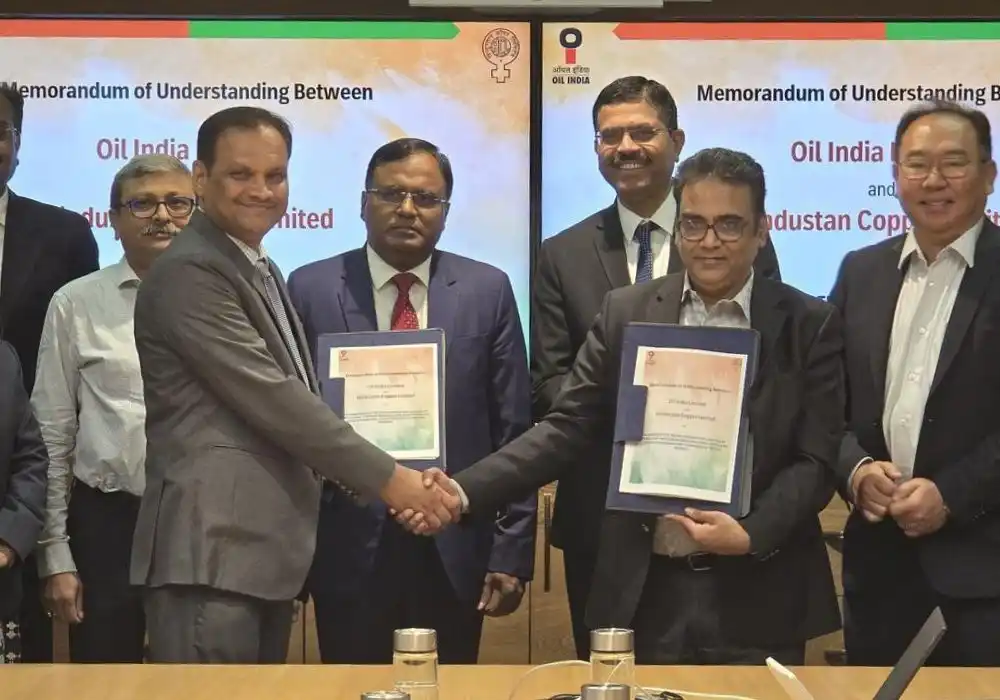
As India surges forward on its path of economic growth, technological advancement, and a greener future, securing essential raw materials becomes paramount. In a strategically significant move set to bolster the nation’s resource independence, Oil India Limited (OIL) and Hindustan Copper Limited (HCL) forged a landmark Memorandum of Understanding (MoU) on September 19, 2025. This alliance is not merely a corporate agreement; it’s a foundational step towards guaranteeing India’s future access to vital critical and strategic minerals, with a primary focus on copper and its associated resources, directly impacting our journey towards self-reliance and global competitiveness. Learn proven methods to strengthen your cognitive exam skills.
The Strategic Partnership Explained: What and Who
This unique collaboration brings together two public sector giants: Oil India Limited, a leading national energy explorer known for its robust financial capabilities and extensive experience in project management, traditionally in the hydrocarbon sector; and Hindustan Copper Limited, India’s only integrated copper producer, possessing deep-rooted expertise in geological exploration, mining, and beneficiation of copper. The core objective of their MoU is to embark on joint exploration and development initiatives across the critical minerals sector.
Why these two distinct entities? The synergy is powerful. OIL brings significant investment potential, project execution prowess, and a vast operational footprint. HCL, on the other hand, contributes its invaluable technical knowledge, geological insights, and established infrastructure in the mining domain. Together, they are poised to leverage their respective strengths to identify, extract, and process crucial mineral resources. This combined effort aims to significantly reduce India’s import reliance and strengthen its domestic supply chains for minerals that are indispensable for modern industries.
Why Critical Minerals Matter: The Core of Future Growth
Critical minerals are not just ordinary industrial commodities; they are the bedrock of modern technology and the future economy. These are elements vital for the manufacturing of advanced electronics, the rapidly expanding electric vehicle (EV) sector, renewable energy technologies like solar panels and wind turbines, sophisticated defence equipment, and crucial medical devices. Unlike common minerals, critical minerals often have complex geological occurrences, limited global supply chains, and are susceptible to geopolitical risks, making their consistent supply a national security issue.
For India, a rapidly industrializing nation with ambitious climate goals and a burgeoning tech sector, secure and stable access to minerals like copper, lithium, cobalt, nickel, and rare earth elements is non-negotiable. Copper, for instance, is fundamental to electrification, a key component in everything from household wiring to advanced electric vehicle batteries and charging infrastructure. Without reliable access to these minerals, the dream of ‘Make in India’ and achieving energy independence, particularly transitioning to cleaner energy sources, remains distant. This initiative directly addresses India’s current vulnerability to supply chain disruptions and price volatility in the international critical mineral market, paving the way for greater economic stability and technological sovereignty.
India’s National Critical Mineral Mission: A Broader Vision
The partnership between OIL and HCL is a direct and impactful manifestation of India’s overarching National Critical Mineral Mission. Launched with the vision of enhancing India’s self-reliance (Atmanirbhar Bharat) in these indispensable resources, the mission aims to identify, acquire, process, and develop critical mineral assets both domestically and internationally. The government profoundly recognizes that a secure, diversified, and stable supply of critical minerals is fundamental to national security, economic stability, and technological sovereignty.
This MoU serves as a powerful example of public sector enterprises actively aligning their strategies with national objectives. It showcases their proactive participation in the exploration and development efforts that are crucial for meeting India’s future demand and insulating the nation from potential global supply shocks. Such collaborations are essential for building a robust and resilient domestic ecosystem for critical minerals, which is a key pillar of India’s long-term strategic planning.
Impact and Future Outlook: A Path to Self-Reliance
The implications of this collaboration between Oil India Limited and Hindustan Copper Limited are far-reaching for India’s economic landscape and strategic posture. By actively exploring for and developing critical minerals, India can significantly reduce its dependence on volatile international markets, which often dictate prices and supply terms. This domestic focus will also create substantial employment opportunities, foster technological innovation in mining, processing, and refining, and ultimately build a more resilient and self-sufficient economy.
While the path to establishing robust critical mineral supply chains is fraught with challenges, including technological hurdles in extraction and processing, environmental considerations, and the need for significant capital investment, this proactive step by OIL and HCL signals a strong commitment from India to secure its place in the global advanced manufacturing landscape. For competitive exam aspirants, understanding such strategic partnerships, their underlying rationale, and their deep connection to national missions like the National Critical Mineral Mission is vital. These topics frequently appear in General Awareness, Economy, and Current Affairs sections of exams like UPSC, SSC, PSC, and other government recruitment tests, demanding a comprehensive understanding of their ‘why’, ‘what’, and ‘how’. This initiative is not just about minerals; it’s about powering India’s future. Your exam preparation journey begins at MyEntrance – India’s leading exam portal.
Frequently Asked Questions (FAQs)
Q1: What exactly are ‘critical minerals’ and why are they important for India’s growth?
A1: Critical minerals are raw materials essential for various modern, high-tech industries, including electric vehicles, renewable energy infrastructure (like solar panels and wind turbines), advanced electronics, and defence applications. They are termed ‘critical’ because their supply is often concentrated in a few countries, making their availability susceptible to geopolitical risks, supply chain disruptions, and price volatility. For India, securing these minerals is crucial for sustaining its rapid economic growth, fostering technological advancement, achieving ambitious clean energy transition goals, and enhancing national security, thereby reducing its heavy reliance on imports.
Q2: What is the main objective of the Memorandum of Understanding (MoU) signed between Oil India Limited (OIL) and Hindustan Copper Limited (HCL)?
A2: The primary objective of the MoU is for OIL and HCL to collaboratively explore, develop, and process critical and strategic minerals, with a particular focus on copper and its associated resources. This partnership aims to strategically leverage their combined strengths – OIL’s financial capabilities, project management experience, and logistical prowess, along with HCL’s deep geological knowledge, mining expertise, and processing capabilities – to bolster India’s domestic supply of these vital raw materials and enhance mineral security.
Q3: How does this partnership between OIL and HCL align with India’s National Critical Mineral Mission?
A3: This MoU is a direct and significant implementation of the goals outlined in India’s National Critical Mineral Mission. The mission seeks to enhance India’s self-reliance (Atmanirbhar Bharat) in critical minerals by actively identifying, acquiring, processing, and developing both domestic and international sources. The OIL-HCL partnership exemplifies how public sector enterprises are proactively contributing to this crucial national strategic objective, working towards greater mineral security and significantly reduced import dependence for key industrial inputs.
Q4: Beyond copper, which other specific critical minerals might be a focus of this agreement in the future?
A4: While copper and its associated resources are a primary and immediate focus, the MoU broadly targets “critical and strategic minerals.” This implies that the joint exploration could potentially extend to other vital minerals often found in conjunction with copper deposits or those deemed strategically important for India’s future. This could include minerals like lithium, cobalt, nickel, and rare earth elements, depending on geological findings, economic viability, and evolving national priorities for advanced technology and clean energy sectors.
Q5: What are the potential long-term benefits of this critical minerals initiative for India’s economy and strategic independence?
A5: In the long term, this initiative holds the potential to significantly enhance India’s mineral security, thereby reducing its vulnerability to volatile international markets and geopolitical uncertainties. It is expected to foster robust domestic manufacturing capabilities, create numerous new employment opportunities across the mining and processing value chain, and promote technological innovation in mineral extraction and refining. Ultimately, it aims to provide a stable and secure supply of raw materials necessary for India’s ambitious clean energy transition, advanced technological aspirations, and overall economic resilience, aligning perfectly with the vision of a self-reliant and globally competitive India.





