
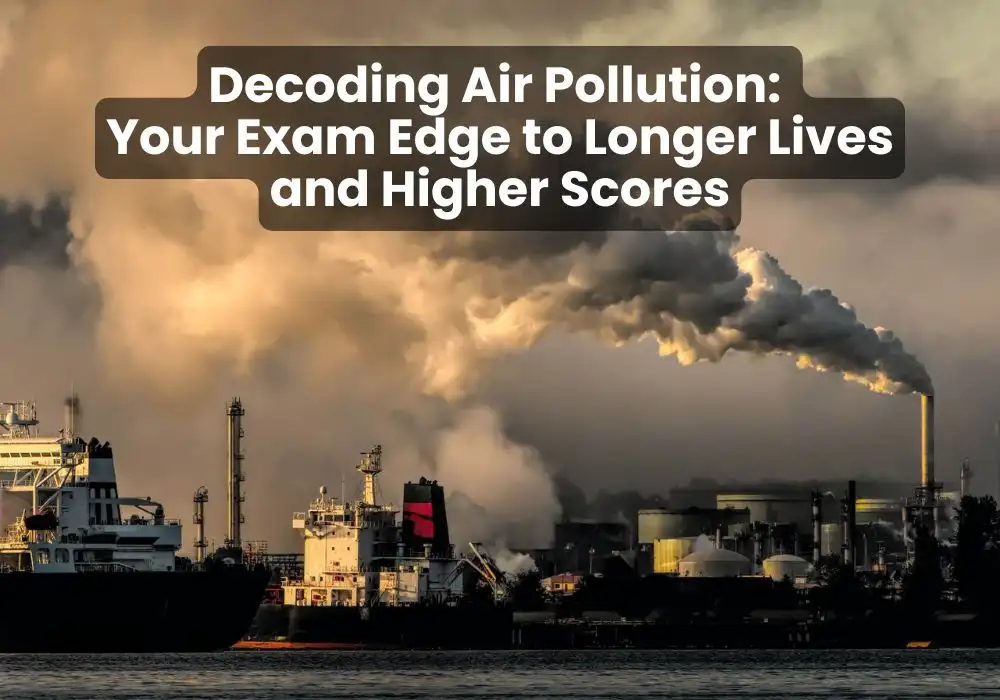
Air quality is not merely an environmental concern; it’s a critical intersection of science, public health, and policy, making it a high-yield topic for competitive examinations. Understanding its nuances is vital for success in exams like UPSC, SSC, PSC, and other government recruitment drives, where environmental issues and their societal impacts are frequently assessed. At myentrance.in, we distill this crucial knowledge into an accessible format designed for your exam preparation.
The Invisible Foe: Air Pollution’s Profound Impact on Human Longevity
Scientific consensus firmly establishes a direct and undeniable link between cleaner air and extended, healthier lives. Rigorous research consistently demonstrates that chronic exposure to polluted air contributes significantly to a reduced life expectancy and a higher burden of disease. This impact stems from various pollutants, each with its own insidious effects. Fine particulate matter, particularly PM2.5, can penetrate deep into the lungs and even enter the bloodstream, triggering respiratory ailments like asthma, bronchitis, and chronic obstructive pulmonary disease. Beyond the respiratory system, these microscopic particles are major contributors to cardiovascular diseases, including heart attacks and strokes, by causing inflammation and damaging blood vessels. Furthermore, emerging science points towards links with neurological disorders, developmental issues in children, and an increased risk of certain cancers, especially lung cancer. Other significant pollutants such as nitrogen oxides, sulfur dioxide, ground-level ozone, carbon monoxide, and volatile organic compounds also contribute to a spectrum of health problems, ranging from impaired lung function to heightened susceptibility to infections, ultimately diminishing overall quality of life and longevity.
Dissecting the Sources and Scientifically Informed Mitigation Strategies
Air pollution originates from a complex interplay of sources, both natural and anthropogenic. Anthropogenic sources, driven by human activities, are the predominant concern in urban and industrial areas. These include vehicular emissions from internal combustion engines, industrial activities encompassing manufacturing and power generation, agricultural practices like stubble burning and livestock farming, and residential combustion of solid fuels for heating and cooking. Natural sources, such as dust storms, volcanic eruptions, and forest fires, also contribute to regional air quality degradation. The scientific basis for mitigation strategies lies in understanding these diverse emission pathways, atmospheric chemistry, and dispersion patterns. Consequently, solutions are multi-faceted, ranging from technological advancements like the adoption of cleaner fuels, the installation of emission control devices (e.g., catalytic converters in vehicles, scrubbers in industries), and the widespread integration of renewable energy sources. Policy interventions, informed by robust scientific data, include the implementation of stringent emission standards, fuel quality regulations, incentivizing public transport and electric vehicles, promoting sustainable urban planning, and establishing comprehensive air quality monitoring systems. Each of these measures is strategically designed to interrupt the cycle of pollution and foster a healthier atmospheric environment.
Global Benchmarks and National Imperatives: The Policy Landscape
The global community, guided by scientific evidence, has established benchmarks and policies to combat air pollution. Organizations like the World Health Organization (WHO) issue air quality guidelines, which, though not legally binding, serve as critical standards for nations to develop their own policies, reflecting a global consensus on acceptable pollutant levels for public health protection. In India, a nation grappling with significant air quality challenges, several imperative policy initiatives have been launched based on these scientific understandings. The National Clean Air Programme (NCAP) represents a significant effort to reduce particulate matter concentrations across numerous cities by setting specific targets. The Graded Response Action Plan (GRAP) is another crucial mechanism, implementing emergency measures in the Delhi-NCR region when air quality deteriorates to severe levels. Furthermore, the progressive adoption of Bharat Stage Emission Standards for vehicles, alongside initiatives promoting electric mobility and sustainable industrial practices, collectively reflects a scientifically informed attempt to translate research findings into actionable frameworks. These policies are not merely administrative directives; they are evidence-based interventions aimed at reversing the trend of declining air quality and, consequently, improving public health and life expectancy across the nation.
Why This Matters for Your Competitive Exam Success
Mastering the topic of air pollution is not just about environmental awareness; it’s a strategic move for your competitive exam success.
* UPSC & PSC Examinations: For the Civil Services Exam (UPSC) and State Public Service Commission (PSC) exams, this topic is directly relevant to General Studies Paper I (Geography), Paper III (Environment & Ecology, Science & Technology, Internal Security – in contexts of resource conflicts or environmental justice), and the Essay Paper. You can expect analytical questions on the causes, effects, policies, international conventions (like the Paris Agreement or various UN Environment Programs), and sustainable development goals related to air quality. Interview rounds often feature scenario-based or policy-oriented questions on environmental governance.
* SSC & Other Government Exams: The General Awareness section in Staff Selection Commission (SSC) exams and various other government recruitment tests frequently includes factual and conceptual questions on environmental issues. This could range from identifying specific pollutants and their sources, understanding the function of bodies like the Central Pollution Control Board (CPCB), knowing key environmental acts, or staying updated on current affairs related to air quality indices (AQI) and national initiatives. Factual recall and a basic conceptual understanding of primary vs. secondary pollutants, health impacts, and major policy interventions are key.
* NID/NIFT and Design Entrance Exams: While not directly scientific, an understanding of environmental challenges like air pollution is indirectly relevant for questions on sustainable design principles, societal challenges, urban planning, and policy impact on communities, reflecting a broader awareness of contemporary issues.
Sample Questions & Answers for Your Practice
Here are five sample questions to test your understanding, crucial for various competitive exams:
1. Question: Which of the following air pollutants is primarily responsible for the depletion of the ozone layer in the stratosphere?
* A) Carbon Monoxide
* B) Sulfur Dioxide
* C) Chlorofluorocarbons (CFCs)
* D) Particulate Matter (PM2.5)
* Answer: C) Chlorofluorocarbons (CFCs)
* Importance: This is a fundamental factual question, common in SSC and basic GK sections, testing knowledge of specific pollutants and their global environmental impacts.
2. Question: The National Clean Air Programme (NCAP), launched in India, primarily aims to achieve what percentage reduction in particulate matter (PM2.5 and PM10) concentrations by 2024, taking 2017 as the base year?
* A) 10-15%
* B) 20-30%
* C) 30-40%
* D) 40-50%
* Answer: B) 20-30%
* Importance: This question is policy-specific and current affairs-oriented, highly relevant for UPSC Prelims and the General Awareness sections of other government exams, requiring knowledge of national environmental initiatives.
3. Question: Which of the following is considered a secondary air pollutant?
* A) Nitrogen Oxides (NOx)
* B) Volatile Organic Compounds (VOCs)
* C) Ground-level Ozone (O3)
* D) Carbon Monoxide (CO)
* Answer: C) Ground-level Ozone (O3)
* Importance: This question tests a conceptual understanding of primary (directly emitted) versus secondary (formed in the atmosphere) pollutants, which is crucial for UPSC and PSC environmental science sections.
4. Question: Persistent exposure to high levels of particulate matter (PM2.5) is scientifically linked to increasing the risk of which of the following health conditions?
* I. Respiratory illnesses like asthma and chronic bronchitis
* II. Cardiovascular diseases, including heart attacks and strokes
* III. Certain types of cancer, particularly lung cancer
* IV. Neurological disorders and cognitive decline
* A) I and II only
* B) I, II and III only
* C) II, III and IV only
* D) I, II, III and IV
* Answer: D) I, II, III and IV
* Importance: This is a multi-statement question, typical of UPSC Prelims, demanding a comprehensive knowledge of the multifaceted health impacts of air pollution.
5. Question: The ‘Graded Response Action Plan (GRAP)’ implemented in the Delhi-NCR region is primarily aimed at:
* A) Promoting renewable energy sources in industrial zones.
* B) Providing financial incentives for the purchase of electric vehicles.
* C) Implementing emergency measures to combat severe air pollution based on AQI levels.
* D) Developing new technologies for efficient waste management.
* Answer: C) Implementing emergency measures to combat severe air pollution based on AQI levels.
* Importance: This question focuses on a specific, high-profile policy initiative, making it relevant for current affairs and understanding practical environmental governance for UPSC, PSC, and SSC exams.





