
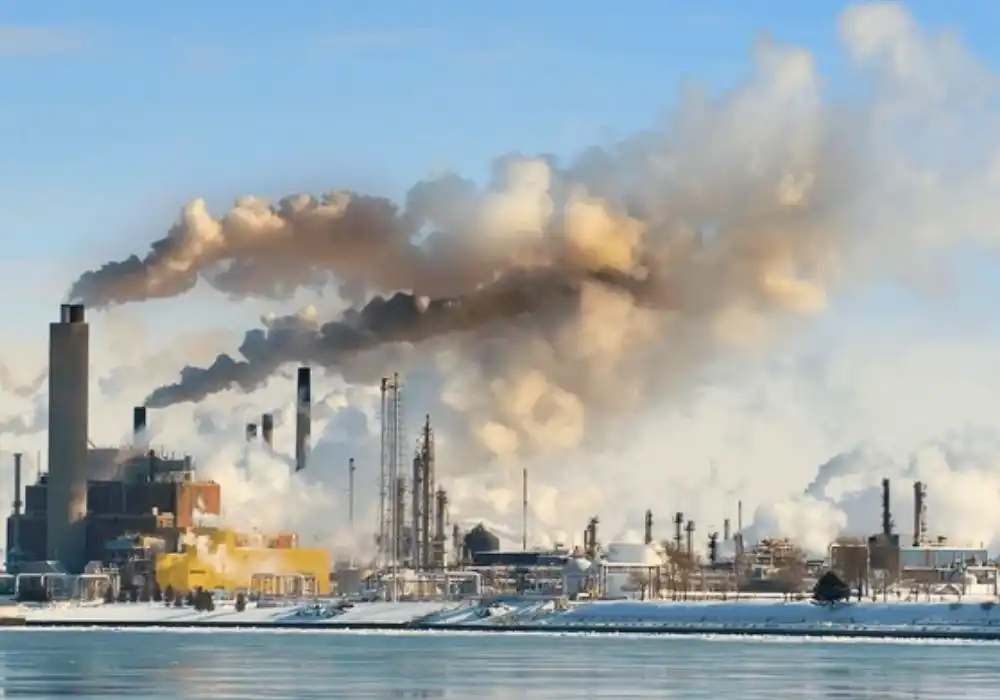
The persistent challenge of air pollution in the Delhi-National Capital Region (NCR) is more than just a seasonal headline; it’s a complex, multi-layered issue that serves as a vital case study for aspiring civil servants and competitive exam candidates. Understanding its nuances, the policy responses, and the governmental machinery involved is crucial for excelling in examinations like UPSC, SSC, PSC, and various other government job tests. Recently, Union Environment Minister Bhupender Yadav brought this critical issue into sharp focus, emphasizing the absolute necessity of a unified and synchronized approach from all stakeholders to combat the deteriorating air quality in this densely populated region. This wasn’t merely a statement but a directive underscoring a strategic shift towards comprehensive environmental governance. A quick revision guide for competitive exams can solidify your knowledge quickly.
The Gravity of the Delhi-NCR Air Challenge: Why It Matters Profoundly
Air pollution in Delhi-NCR transcends a simple environmental problem; it represents a profound public health crisis and a significant economic burden. For years, the region has grappled with alarming levels of particulate matter (PM2.5, PM10) and other harmful pollutants, especially during the winter months. This severe air quality directly impacts millions of lives, leading to a surge in respiratory ailments, cardiovascular diseases, and a general decline in the quality of life. From an examination perspective, understanding the “why” involves recognizing the multifaceted sources – vehicular emissions, industrial discharge, construction dust, stubble burning in neighboring states, and meteorological conditions that trap pollutants. Grasping these contributing factors is key to answering analytical questions in General Studies papers and current affairs quizzes. The sheer scale and persistent nature of this problem make it a prime example of governance challenges, inter-state cooperation issues, and sustainable development goals.
The Call for Coordinated Action: A Strategic Imperative for Governance
The core message from Environment Minister Bhupender Yadav highlights a fundamental principle of effective governance: integrated action. During a high-level review meeting in New Delhi, the Minister wasn’t just observing; he was actively steering the discussion towards actionable, collaborative strategies. “Coordinated action” means moving beyond fragmented efforts by individual departments or states. It implies a seamless collaboration among central ministries, state governments (Delhi, Uttar Pradesh, Haryana, Rajasthan), local bodies, and even the private sector. The “how” involves shared responsibility, pooling of resources, consistent policy implementation, and real-time monitoring. The industry, too, has been called upon to acknowledge its role and contribute actively to mitigation efforts, which could include adopting cleaner technologies, reducing emissions, and ensuring compliance with environmental norms. For exam aspirants, this illustrates the practical application of federalism, administrative coordination, and the critical role of ministerial leadership in addressing complex national challenges. Such meetings often pave the way for new policies, amendments to existing acts (like the Air Act or Environment Protection Act), or the formation of new committees – all potential direct questions in your exams.
Understanding the “Where” and “When”: Context for Exam Relevance
The focus on the “Delhi-NCR” is geographically significant. The National Capital Region encompasses not just Delhi but also several adjoining districts from neighboring states, making pollution a trans-boundary issue. This highlights the challenges of implementing uniform policies and enforcing regulations across different administrative jurisdictions. The “when” is often seasonal, particularly the post-monsoon and winter periods when atmospheric conditions exacerbate the problem. However, the need for coordinated action is year-round, addressing both immediate concerns and long-term preventive measures. For instance, questions might arise about the role of the Commission for Air Quality Management (CAQM) in the NCR and Adjoining Areas, its powers, and its mandate. Understanding the specific institutional frameworks set up to tackle this regional problem is crucial for Static GK and current affairs segments of competitive exams. Challenge yourself with our daily news quiz for upsc and ssc to test your awareness.
What This Means for Your Exams: Your Pathway to Success
For anyone preparing for government and competitive exams, the issue of Delhi-NCR air pollution offers a rich tapestry of study material:
1. Current Affairs: Regular updates on ministerial statements, new policies, judicial interventions, and international cooperation related to air pollution are direct current affairs fodder.
2. General Knowledge (Static GK): Familiarize yourself with key terms like Air Quality Index (AQI), PM2.5, PM10, smog, responsible government agencies (CPCB, EPCA, CAQM), and relevant environmental legislation.
3. UPSC/PSC Mains: This topic is invaluable for General Studies Paper III (Environment and Ecology, Disaster Management) and Paper II (Governance, Polity, Federalism). It provides excellent examples for essay writing on sustainable development, public health, and urban challenges.
4. Interview Preparation: Expect questions on your views regarding environmental issues, policy effectiveness, and potential solutions to complex problems like air pollution.
By analyzing the Environment Minister’s call for action, you’re not just absorbing news; you’re dissecting a real-world problem through the lens of governance, environmental science, and public policy – skills indispensable for cracking any competitive examination.
Frequently Asked Questions (FAQs)
Q1: What is the primary objective of the Environment Minister’s call for “coordinated action” on Delhi-NCR air pollution?
A1: The main objective is to establish a unified and integrated strategy among all relevant agencies, central and state governments, local bodies, and industries to effectively combat air pollution in the Delhi-NCR region. This coordinated approach aims to overcome fragmented efforts, streamline policy implementation, share resources, and ensure consistent monitoring and enforcement for sustainable air quality improvement.
Q2: Which government bodies or acts are most relevant to understanding air pollution control in India for competitive exams?
A2: Key relevant bodies include the Ministry of Environment, Forest and Climate Change (MoEFCC), Central Pollution Control Board (CPCB), State Pollution Control Boards (SPCBs), and specifically for NCR, the Commission for Air Quality Management (CAQM). Important legislative frameworks are the Air (Prevention and Control of Pollution) Act, 1981, and the Environment (Protection) Act, 1986.
Q3: Besides vehicular emissions, what are some other significant sources of air pollution in the Delhi-NCR region that are often discussed in exams?
A3: Other significant sources include industrial emissions, dust from construction and demolition activities, household burning of biomass and waste, and agricultural stubble burning in neighboring states during specific seasons. Meteorological factors like low wind speed and temperature inversion layers also exacerbate the problem by trapping pollutants.
Q4: How can students effectively integrate current affairs like the Delhi-NCR air pollution issue into their preparation for UPSC and other government exams?
A4: Students should follow news related to environmental policies, governmental initiatives, and judicial pronouncements on such issues. They should analyze the “why,” “what,” and “how” of these events, linking them to static GK concepts (e.g., environmental acts, pollution types), governance challenges (e.g., inter-state disputes, policy implementation), and economic implications. This provides excellent material for General Studies papers, essays, and interviews.
Q5: What is the significance of high-level review meetings chaired by ministers, such as the one held by the Environment Minister on air pollution?
A5: These meetings are crucial because they demonstrate high-level political commitment to an issue, facilitate direct communication and accountability among various agencies, and help in identifying bottlenecks and formulating actionable strategies. For exams, such meetings often signal upcoming policy changes, increased resource allocation, or renewed focus on specific problems, making them important events to track in current affairs.





