
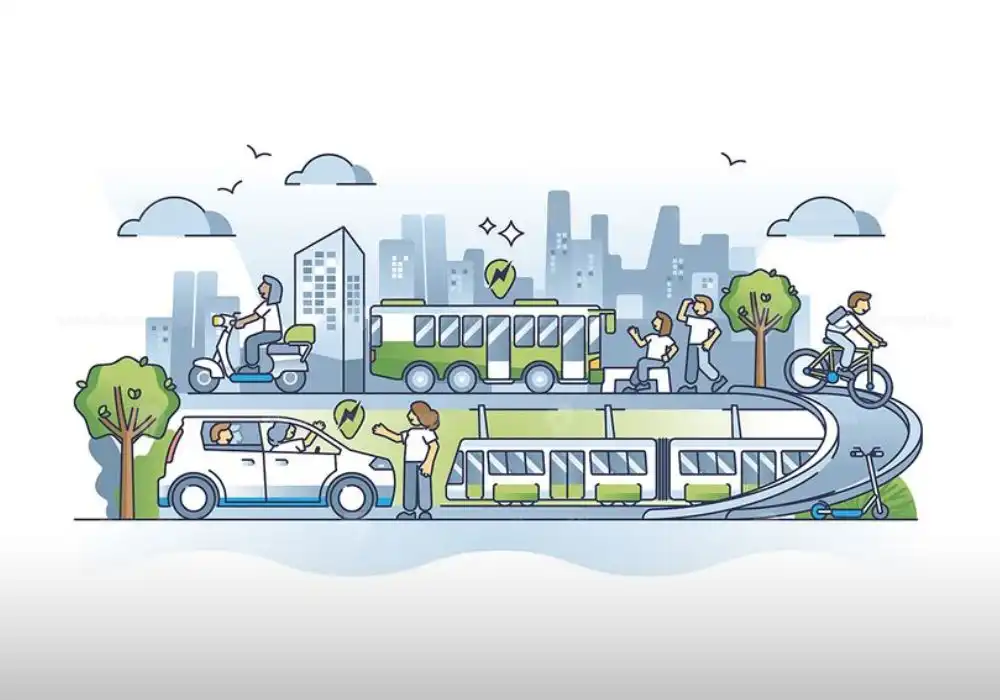
India’s Green Leap: Why Sustainable Transport is Now Imperative
India’s ambition to become a global economic power is intrinsically linked to its infrastructure development. Yet, this rapid growth must be harmonized with environmental stewardship. Road, Transport and Highways Minister Nitin Gadkari recently emphasized this critical balance, highlighting India’s unwavering commitment to building a sustainable transport sector. For aspiring candidates preparing for demanding examinations like UPSC, SSC, PSC, NID, NIFT, and other government exams, understanding this fundamental shift is not merely about staying updated on current affairs; it’s about grasping core policy directions, technological innovations, and their profound implications for the nation’s future. Let us delve into why this transformation is crucial, what it truly entails, and how it directly impacts your exam preparation. Many consider us the best online portal for exam preparation due to our quality content.
The impetus for a robust and sustainable transport system in India is multi-faceted and urgent. Firstly, the burgeoning urban populations and increasing vehicle density have led to significant environmental challenges, including severe air pollution and rising greenhouse gas emissions, which directly impact public health and global climate targets. Secondly, India’s historical reliance on imported fossil fuels creates critical energy security vulnerabilities and considerable economic strain. By wholeheartedly embracing sustainable alternatives, the nation strategically aims to dramatically reduce its carbon footprint, secure its energy independence, and foster a cleaner, healthier environment for all its citizens. This strategic pivot ensures that India’s development trajectory is not just fast-paced but also responsible, resilient, and inherently future-proof.
What Drives India’s Green Roads? Key Pillars of Transformation
India’s strategy for forging a greener, more sustainable transport sector rests firmly on several innovative and interconnected pillars:
Biofuels as a Game-Changer: The widespread adoption and increased blending of biofuels, such as ethanol in petrol, represent a pivotal step in this direction. This initiative offers a significantly cleaner-burning alternative to traditional fossil fuels and simultaneously provides substantial economic benefits to farmers by creating a robust demand for feedstock crops. For competitive exams, a thorough understanding of the different types of biofuels, their production methods, and the government’s blending targets is absolutely vital for general knowledge sections.
The Electric Vehicle (EV) Revolution: Electric vehicles are undeniably at the forefront of this sustainable transition. The government is proactively promoting EV adoption through a comprehensive suite of policies, targeted subsidies, and the rapid development of a robust and accessible charging infrastructure across the country. From electric two-wheelers revolutionizing urban commutes to large-scale public transport electrification, the nationwide push for EVs aims to drastically reduce vehicular emissions and diminish dependence on crude oil. Expect questions on government schemes related to EVs, such as the FAME India scheme, to be common in various examinations.
Harnessing Renewable Energy: The focus extends beyond just powering vehicles; it crucially involves integrating renewable energy sources into the broader transport ecosystem. This includes the development of solar-powered charging stations, pioneering green hydrogen initiatives, and the increasing use of sustainable materials in road construction. This holistic, lifecycle-based approach ensures that the entire transport infrastructure, from its inception to operation, is environmentally conscious and energy-efficient.
Building Sustainable Infrastructure: It is not solely about the vehicles on the road; it is equally about the roads themselves, the bridges, and the entire network of transport hubs. Sustainable infrastructure involves employing eco-friendly construction techniques, designing resilient structures that can withstand anticipated climate impacts, and implementing smart technologies for optimized traffic management. All these elements are meticulously designed to minimize ecological disturbance while maximizing the utility and longevity of the transport network.
How is This Vision Being Implemented? Policy and Progress in Motion
The unwavering commitment of the government, eloquently articulated by Minister Gadkari at forums like the Panchajanya Infra Confluence 2025, underscores a dynamic and forward-looking policy framework. This includes setting ambitious targets for biofuel blending, providing strong incentives for EV manufacturing and purchase, and investing heavily in large-scale renewable energy projects that support the transport sector. The delicate yet crucial balancing act between accelerating infrastructure development to underpin robust economic growth and strictly adhering to stringent environmental protection norms forms the very core of this implementation strategy. These ongoing policy shifts and their measurable outcomes are prime areas for current affairs and policy-based questions in competitive examinations. Therefore, staying meticulously updated on key government announcements, legislative changes, and project implementations becomes absolutely paramount for your success.
Your Exam Advantage: Connecting the Dots for Success
For dedicated competitive exam aspirants, this topic is a veritable treasure trove of potential questions. You are highly likely to encounter questions on the precise definition of sustainable transport, specific government policies related to EVs or biofuels, the comparative environmental impact of traditional versus green transport, or even the broad economic implications of these transformative shifts. A deep and nuanced understanding will empower you to confidently answer not only factual recall questions but also analytical and descriptive ones, which are especially prevalent in mains examinations for UPSC and PSC. To solidify your grasp on these vital subjects, make sure to effectively utilize interactive quizzes, daily news updates, and comprehensive static GK resources available on platforms like myentrance.in. You can stay ahead with our gk exam updates delivered straight to you.
Frequently Asked Questions (FAQs)
Q1: What exactly does “sustainable transport” mean for India in a practical sense?
A1: Sustainable transport in India refers to developing and implementing transport systems that efficiently meet the current needs of the population without compromising the ability of future generations to meet their own needs. Practically, it focuses on minimizing environmental impact by reducing pollution and carbon emissions, conserving natural resources by lessening reliance on fossil fuels, and ensuring social equity and economic viability. This is primarily achieved through the strategic adoption of biofuels, electric vehicles, and integrating renewable energy sources throughout the transport infrastructure.
Q2: Why is India placing such a strong emphasis on biofuels in its transport sector strategy?
A2: India’s robust focus on biofuels is driven by a combination of critical objectives. Firstly, it aims to significantly reduce the nation’s dependence on crude oil imports, thereby enhancing energy security. Secondly, it plays a vital role in minimizing greenhouse gas emissions, directly contributing to climate change mitigation efforts. Thirdly, it provides substantial economic benefits to the agricultural sector by creating a strong and consistent demand for crops used in biofuel production. Initiatives like ethanol blending are key to achieving a cleaner fuel mix and simultaneously supporting the rural economy.
Q3: What specific and vital role do Electric Vehicles (EVs) play in India’s sustainable transport vision?
A3: Electric Vehicles are undeniably central to India’s vision for sustainable transport because they offer a direct, zero-tailpipe-emission alternative to traditional internal combustion engine vehicles, which directly addresses pervasive urban air pollution. The government is actively and aggressively promoting EV adoption through various schemes such as FAME India, encouraging local manufacturing to build a domestic industry, expanding robust charging infrastructure nationwide, and offering financial incentives to accelerate their widespread adoption across both personal and public transport segments.
Q4: How does the shift towards sustainable transport benefit the Indian economy beyond just environmental advantages?
A4: Economically, the profound shift towards sustainable transport generates entirely new industries and significant job opportunities in sectors such as EV manufacturing, advanced battery production, renewable energy installations, and biofuel processing. It substantially reduces the nation’s expenditure on costly crude oil imports, which directly strengthens the national economy. Furthermore, it fosters intense innovation and cutting-edge research, positioning India as a potential leader in green technologies and potentially opening up new export markets for sustainable transport solutions.
Q5: Which key government ministry or body is primarily responsible for spearheading these sustainable transport initiatives in India?
A5: While several ministries contribute significantly to this broad initiative, the Ministry of Road Transport and Highways, under the leadership of figures like Nitin Gadkari, plays an absolutely pivotal role. It is primarily responsible for formulating comprehensive policies and implementing large-scale projects related to sustainable road infrastructure, vehicle regulations, and the proactive promotion of green technologies such as biofuels and electric vehicles across the entire transport sector. Other ministries, including the Ministry of Power (responsible for EV charging infrastructure) and the Ministry of New and Renewable Energy, also play crucial supporting roles.





