
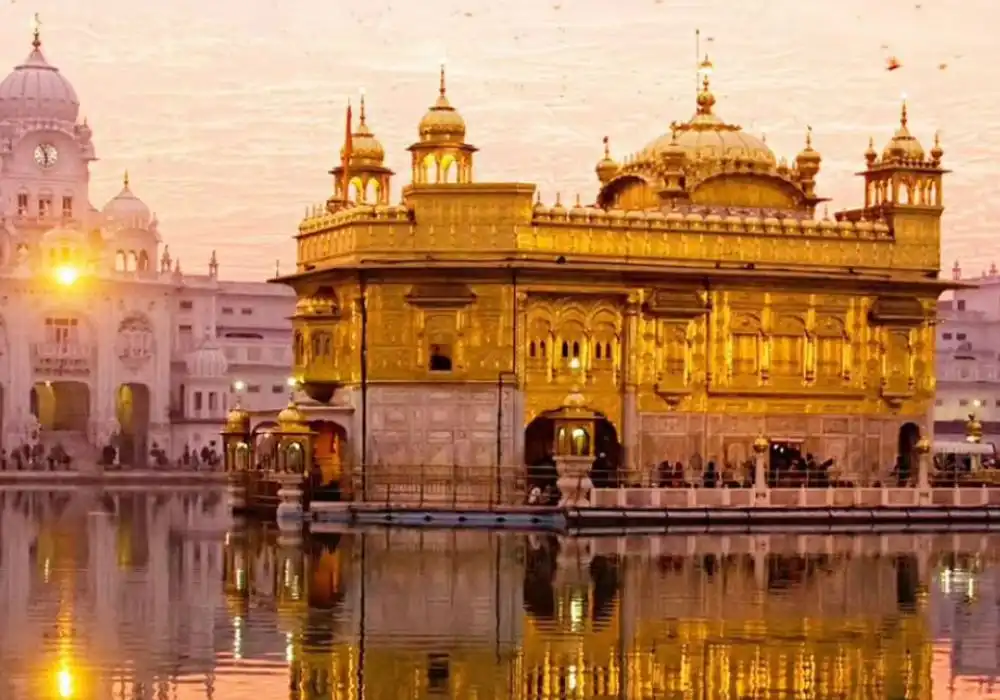
As aspirants gearing up for challenging competitive examinations like UPSC, SSC, PSC, NID, NIFT, and other government roles, you know that general knowledge and current affairs are not just subjects but crucial keys to unlocking your success. At MyEntrance.in, we understand the depth and breadth of knowledge required, and that’s why we bring you insights into topics that consistently appear in your exams. One such iconic landmark, frequently questioned for its historical, cultural, and geographical significance, is the Golden Temple.
The Jewel of Amritsar: Location and Identity
The Golden Temple, globally revered and instantly recognizable, officially known as Sri Harmandir Sahib, stands majestically in Amritsar, a vibrant city nestled in the heart of the state of Punjab, India. This sacred complex is more than just a religious site; it is a profound symbol of spiritual devotion, architectural brilliance, and historical resilience. When you encounter questions about significant religious sites, cultural heritage, or important Indian cities in your Static General Knowledge section, Amritsar and the Harmandir Sahib are very likely to feature. Understanding its precise location and its formal identity is the foundational knowledge every aspiring candidate must possess.
More Than Just a Shrine: Its Exam Relevance
Why is a place like the Golden Temple so important for your exam preparation? Firstly, it’s a cornerstone of Indian history and culture. Its construction began under the fourth Sikh Guru, Guru Ram Das, and was completed by his successor, Guru Arjan Dev, in the 16th century. The unique architectural design, featuring four entrances symbolizing openness to all people irrespective of faith, caste, or creed, offers valuable insights into the inclusive philosophy of Sikhism. Later, Maharaja Ranjit Singh, the founder of the Sikh Empire, embellished the upper floors with gold leaf, giving it the popular name ‘Golden Temple’. This historical journey provides rich material for history questions, especially for SSC and UPSC preliminary exams.
Secondly, its significance extends to geography and current affairs. Questions about important cities, states, and their cultural landmarks frequently appear. Being able to pinpoint Amritsar on the map and understand its cultural context adds depth to your geographical knowledge. Should there be any significant event or development related to the Harmandir Sahib, it instantly becomes a relevant topic for daily news quizzes and current affairs sections, something MyEntrance.in diligently covers to keep you updated. Furthermore, its economic and tourist importance for Punjab can be a subject for essay-type questions in UPSC mains or descriptive papers.
Unlocking Deeper Knowledge for Success
Preparing for competitive exams means going beyond surface-level facts. When studying the Golden Temple, consider its role as the most sacred Gurdwara of Sikhism, housing the Adi Granth, the holy scripture. The Akal Takht, one of the five Takhts (seats of power) of the Sikhs, is also part of the complex, representing temporal authority. Understanding these intricate details not only boosts your score in direct questions but also enhances your overall cultural and historical perspective, which is invaluable for comprehensive general studies papers. MyEntrance.in provides interactive examinations and detailed course materials that delve into these very nuances, ensuring you grasp the ‘why’ and ‘how’ behind every ‘what’ and ‘where’. By mastering such interconnected knowledge, you equip yourself with the confidence and precision needed to tackle any question thrown your way, turning a simple location fact into a multi-faceted answer that impresses examiners.
Frequently Asked Questions (FAQs)
Q1: What is the official name of the Golden Temple, and what does it signify?
A1: The official name is Sri Harmandir Sahib. “Harmandir” means “Temple of God,” and “Sahib” is a term of respect, collectively signifying it as the revered abode of God.
Q2: Which major historical figures are associated with the construction and beautification of the Golden Temple?
A2: The construction was initiated by Guru Ram Das, the fourth Sikh Guru, and completed by his successor, Guru Arjan Dev. The iconic golden plating was later added by Maharaja Ranjit Singh, the founder of the Sikh Empire.
Q3: What is the significance of the ‘Sarovar’ surrounding the Golden Temple?
A3: The holy tank surrounding the temple is known as the Amrit Sarovar, meaning “Pool of Nectar.” It is believed to have sacred healing properties, and pilgrims often bathe in its waters for spiritual purification.
Q4: How many entrances does the Golden Temple complex have, and what is their symbolism?
A4: The Harmandir Sahib features four entrances, facing each cardinal direction. This design symbolizes its open invitation to people from all walks of life, faiths, and backgrounds to enter and worship, embodying the principles of equality and inclusivity.
Q5: Why is the Golden Temple an important topic for competitive exams like UPSC and SSC?
A5: It’s crucial for exams because it covers multiple subjects: Static GK (history, architecture, religious sites, cultural heritage), Current Affairs (any recent news or events related to it), and Geography (location, importance of Amritsar). Questions often test historical facts, architectural details, and its cultural significance.





