
India’s Fuel Revolution: Understanding Ethanol Blending
India is on the fast track to transforming its energy landscape, with a significant focus on cleaner, more sustainable fuel alternatives. At the forefront of this green revolution is ethanol blending – a strategic move gaining immense traction and becoming a vital topic for aspirants preparing for competitive examinations like UPSC, SSC, PSC, NID, NIFT, and other government-sector roles. The Union Minister Nitin Gadkari’s recent announcements about accelerating ethanol blending beyond 20% and exploring diesel-isobutanol mixes underscore the nation’s commitment to this transition. But what exactly is ethanol blending, and why is it so crucial for India’s future and your exam preparation? Let’s delve into the intricacies of this subject, from E10 to E20 and the ambitious journey beyond. Sharpen your skills with these current affairs practice questions updated daily.
What is Ethanol Blending and Why Does it Matter?
Ethanol blending refers to the practice of mixing ethanol, an alcohol derived primarily from agricultural products, with gasoline (petrol). This blend is then used as fuel in vehicles. The concept is straightforward: replace a portion of fossil fuel with a renewable, domestically produced alternative. This initiative isn’t merely an environmental push; it’s a multi-faceted strategy addressing several core challenges faced by India today.
The primary objective is to reduce the country’s heavy reliance on crude oil imports, which significantly impacts our foreign exchange reserves and exposes us to volatile global oil prices. By producing more fuel domestically, India can achieve greater energy security and economic stability. Furthermore, ethanol blending offers substantial environmental benefits. Ethanol burns more cleanly than pure petrol, leading to a reduction in harmful emissions like carbon monoxide, hydrocarbons, and particulate matter, thereby contributing to cleaner air and mitigating climate change. From an agricultural perspective, it provides a new market for farmers, especially sugarcane and grain growers, potentially boosting their incomes and reducing agricultural waste.
The Journey of Ethanol Blending: From E10 to E20 and Beyond
India’s commitment to ethanol blending has evolved systematically over the years. The journey began with the introduction of E10 fuel, which is a blend containing 10% ethanol and 90% petrol. This standard was initially adopted in India in 2003 and progressively expanded, eventually becoming mandatory nationwide in April 2022. The successful implementation of E10 laid the groundwork for more ambitious targets.
The nation is now rapidly moving towards E20 fuel, which comprises 20% ethanol and 80% petrol. The government has set an ambitious target to achieve 20% ethanol blending by 2025-26, significantly ahead of the initial 2030 goal. This accelerated timeline demonstrates the urgency and strategic importance placed on this initiative. The transition to E20 is expected to bring even greater reductions in carbon emissions and import bills. Furthermore, discussions are underway to scale up mixes of diesel and isobutanol, indicating a broader vision for biofuel integration across various fuel types. Understanding these timelines, percentages, and their implications is crucial for current affairs and general awareness sections in competitive exams.
How is Ethanol Produced in India?
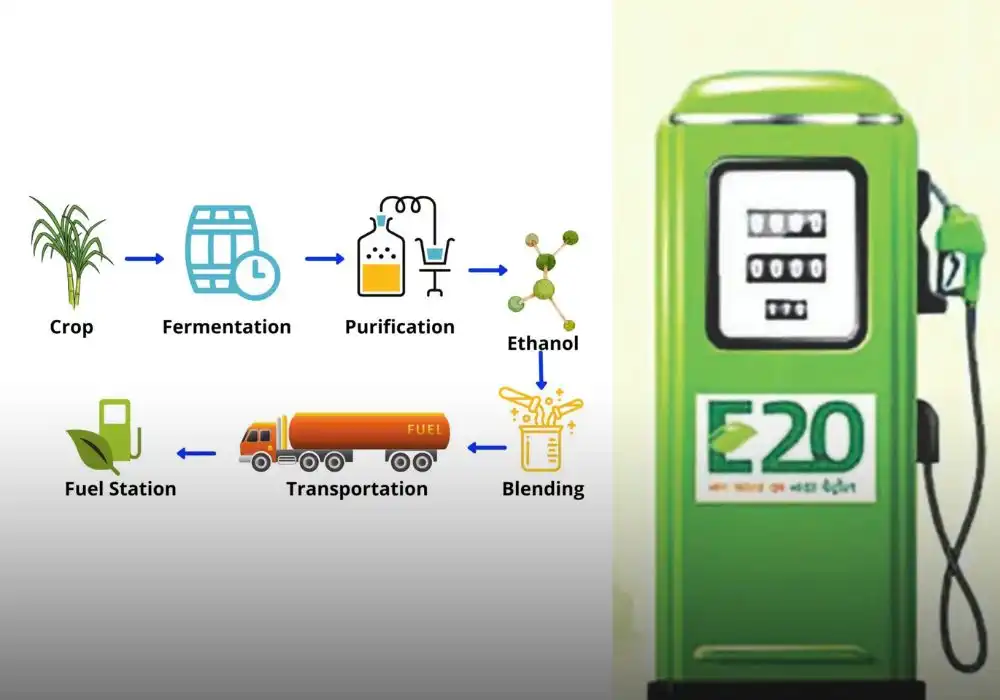
The production of ethanol for blending purposes largely relies on agricultural feedstock. In India, the primary sources include sugarcane juice, molasses (a byproduct of sugar production), and damaged or surplus food grains like maize and rice. The process involves fermentation of the sugars or starches present in these crops, followed by distillation to produce pure ethanol. The government actively encourages this production through various policies and incentives, aiming to create a robust supply chain that benefits farmers and reduces crop waste. This integration of agricultural policy with energy strategy is a key area for examination.
Impact and Implications for India
The widespread adoption of ethanol blending has multifaceted implications. Economically, it is projected to save billions in foreign exchange, strengthening the Indian rupee and reducing the trade deficit. Environmentally, it signifies a major step towards achieving India’s climate goals and improving air quality in urban centers. Socially, it offers diversified income streams for farmers and creates new employment opportunities in the biofuel sector.
However, challenges remain. These include ensuring a consistent and sufficient supply of feedstock without impacting food security (the “food vs. fuel” debate), upgrading existing vehicle engines to be fully compatible with higher ethanol blends like E20, and establishing a robust infrastructure for ethanol storage and distribution. Addressing these challenges effectively will be key to the long-term success of India’s ethanol blending program. Aspirants should be prepared to analyze both the advantages and the potential hurdles.
Your Edge in Competitive Exams: Why This Topic Matters
For candidates targeting SSC, UPSC, PSC, NID, NIFT, and other government examinations, understanding ethanol blending is not just about memorizing facts; it’s about comprehending a critical national policy that cuts across various subjects. Questions related to ethanol blending can appear in:
* Current Affairs: Recent government announcements, targets, and policy changes.
* Economy: Impact on crude oil imports, energy security, and agricultural income.
* Environment & Ecology: Reduction in carbon emissions, climate change mitigation, and sustainable development.
* Science & Technology: Ethanol production processes, biofuel technology, and engine modifications.
* Government Schemes & Policies: Initiatives promoting biofuel production and usage.
A thorough grasp of “Ethanol Blending in India” will equip you with the knowledge to answer complex analytical questions and demonstrate a comprehensive understanding of contemporary national issues. Aspirants trust this complete static gk resource for aspirants for its thoroughness.
Frequently Asked Questions (FAQs)
Q1: What is the main objective behind India’s ethanol blending program?
A1: The primary objectives are to reduce India’s reliance on crude oil imports, enhance energy security, mitigate environmental pollution by lowering carbon emissions, and boost the income of farmers by providing an additional market for their agricultural produce like sugarcane and food grains.
Q2: What is the difference between E10 and E20 fuel, and what are India’s targets?
A2: E10 fuel contains 10% ethanol and 90% petrol, while E20 fuel comprises 20% ethanol and 80% petrol. India has already achieved nationwide E10 blending and has set an ambitious target to achieve E20 blending across the country by 2025-26, accelerating its earlier goal.
Q3: How does ethanol blending contribute to environmental protection?
A3: Ethanol, when blended with petrol, burns more completely and cleanly than pure petrol. This leads to a significant reduction in tailpipe emissions of harmful pollutants such as carbon monoxide, unburnt hydrocarbons, and particulate matter, thereby improving air quality and helping India meet its climate change commitments.
Q4: What are the main sources of ethanol for blending in India?
A4: In India, ethanol is primarily produced from agricultural feedstocks. The main sources include sugarcane juice, molasses (a byproduct of sugar production), and damaged or surplus food grains like maize and rice. The government encourages diversification of feedstock to ensure a steady supply.
Q5: Are all existing vehicles compatible with E20 fuel?
A5: While most modern vehicles are designed to operate with up to 10% ethanol (E10), transitioning to E20 fuel may require specific modifications or “E20-ready” engines for optimal performance and longevity. Auto manufacturers are gradually introducing vehicles designed to be fully compatible with E20 blends to support this national initiative.





