
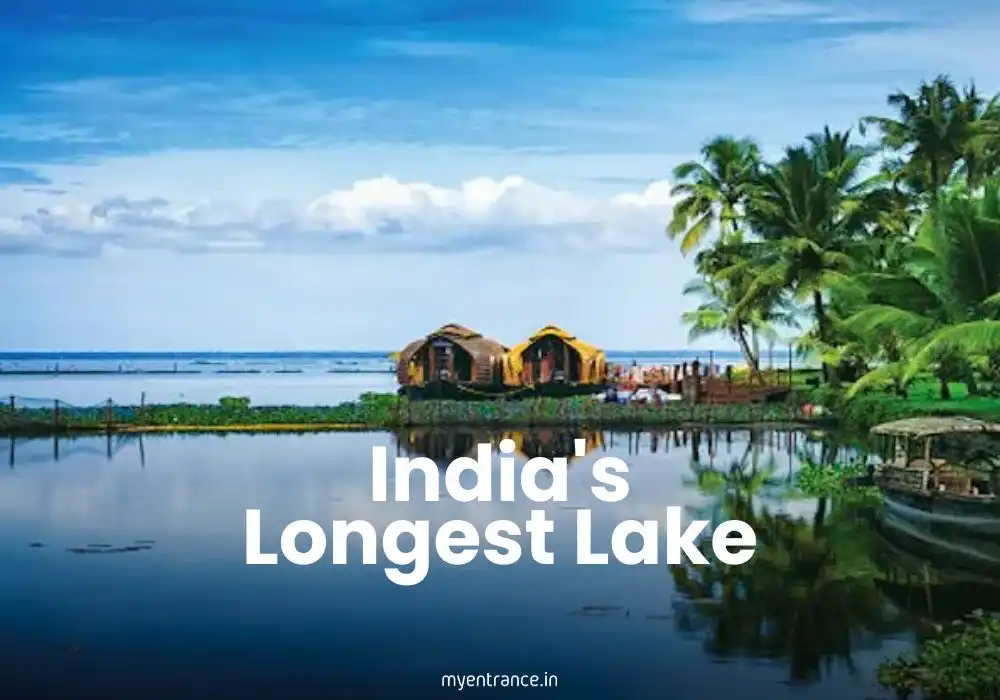
Welcome, future civil servants and exam conquerors, to a journey into the heart of one of India’s most significant geographical marvels: Vembanad Lake. More than just a picturesque expanse of water, Vembanad is a vital ecosystem, an economic powerhouse, and a frequent topic in competitive examinations like UPSC, SSC, PSC, and various government recruitment tests. Understanding this majestic lake goes beyond mere memorization; it’s about grasping its ecological, economic, and cultural importance, offering crucial insights for your General Knowledge, Environment, and Geography sections. Let’s delve deep into what makes Vembanad an indispensable part of your study material.
Unveiling Vembanad’s Geographical Majesty: Where and What It Is
The Vembanad Lake, often referred to as Vembanad Kayal, stands proudly as the longest lake in India and the largest in the picturesque state of Kerala. Spanning across several districts, including Alappuzha, Kottayam, and Ernakulam, this vast estuarine system is not merely a freshwater body but a complex network of brackish lagoons, canals, and river deltas that ultimately connects to the Arabian Sea. Its sheer size and unique characteristics make it a geographical standout, stretching over 96 kilometers in length and covering an area of approximately 2033 square kilometers. This makes it a prime example of an extensive backwater system, a distinctive feature of Kerala’s coastal landscape, intricately shaped by the confluence of numerous rivers like the Periyar, Meenachil, Pamba, and Manimala. For your exams, recognizing its location, its status as the longest and largest, and its estuarine nature is absolutely critical. It’s important to test your knowledge with our news pointers to identify weak areas.
Why Vembanad Matters: A Multifaceted Jewel of Importance
The significance of Vembanad Lake extends far beyond its impressive dimensions; it is a linchpin for both the environment and human activity in the region. Ecologically, Vembanad is globally recognized as a Ramsar site, designated for its international importance as a wetland. This classification underscores its critical role in maintaining biodiversity, supporting numerous species of migratory birds, and acting as a vital habitat for various aquatic life, including endemic fish species. Its rich mangrove forests and associated flora further contribute to its ecological health, serving as natural flood buffers and crucial breeding grounds.
Economically, Vembanad is the lifeline for a substantial population. It is the heart of Kerala’s famed backwater tourism, attracting millions with its iconic houseboats, serene landscapes, and unique village life experiences, particularly around areas like Kumarakom and Alappuzha. The lake supports a thriving fishing industry, providing livelihoods for thousands. Furthermore, the fertile lands of Kuttanad, often referred to as the “Rice Bowl of Kerala,” are situated below sea level and are intricately dependent on the lake for irrigation and drainage, showcasing a remarkable adaptation of agriculture. Culturally, Vembanad is synonymous with the vibrant Nehru Trophy Boat Race, an annual event that draws immense crowds and celebrates the rich heritage of Kerala’s boat racing traditions. Understanding these multifaceted roles – ecological, economic, and cultural – provides a comprehensive overview for any competitive exam aspirant.
Navigating the Challenges: Threats to Vembanad’s Future
Despite its immense importance, Vembanad Lake faces a growing array of threats that endanger its delicate ecosystem and the livelihoods it supports. A major concern is pollution, stemming from various sources including agricultural runoff laden with pesticides, untreated industrial effluents, and domestic sewage from surrounding urban areas. This influx of pollutants leads to eutrophication, diminishing water quality and harming aquatic life. Encroachment from expanding urbanization and unmanaged tourism activities also poses a significant challenge, leading to habitat loss and reduction in the lake’s area.
Perhaps one of the most discussed interventions, with both benefits and drawbacks, is the Thanneermukkom Bund. Constructed primarily to prevent saline water intrusion into the Kuttanad paddy fields, especially during the dry season, it inadvertently altered the lake’s natural flushing mechanisms. This change has led to increased sedimentation, the proliferation of invasive species, and a decline in the populations of certain fish species that thrive in brackish waters. Climate change, with its potential for altered rainfall patterns and sea-level rise, presents further long-term challenges to this vital wetland. Recognizing these threats and the impact of human interventions like the Thanneermukkom Bund is crucial for answering analytical questions in your exams.
Safeguarding a Legacy: Conservation and Exam Relevance
The recognition of Vembanad as a Ramsar site highlights the international commitment to its conservation, prompting various national and state-level initiatives aimed at protecting and restoring its ecological balance. These efforts include stricter regulations on pollution discharge, community-based conservation programs, and sustainable tourism practices. For an exam aspirant, the story of Vembanad Lake serves as an excellent case study encompassing critical topics such as wetland ecosystems, sustainable development, the impact of human interventions on nature, and the importance of conservation. From its geographical statistics to its ecological status, economic contributions, and environmental challenges, every aspect of Vembanad offers valuable insights for mastering current affairs, general knowledge, environmental studies, and geography sections of competitive examinations. MyEntrance.in is committed to helping you understand these complex topics, ensuring you are thoroughly prepared to tackle any question related to India’s magnificent lakes and wetlands. This resource covers all important static general knowledge topics that are frequently asked.
Frequently Asked Questions (FAQs)
1. What is the primary significance of Vembanad Lake for competitive exams?
Vembanad Lake is highly significant for exams because it is India’s longest lake and Kerala’s largest, a designated Ramsar site highlighting its ecological importance as a wetland, a major tourism hub known for its backwaters and houseboats, and crucial for the unique Kuttanad farming below sea level. These aspects cover geography, environment, economy, and culture, making it a frequent topic in GK, Environment, and Geography sections.
2. What does it mean for Vembanad Lake to be a “Ramsar site”?
Being a Ramsar site means that Vembanad Lake is recognized as a Wetland of International Importance under the Ramsar Convention, an intergovernmental environmental treaty. This designation signifies its critical role in global biodiversity conservation and emphasizes the need for its wise use and sustainable management, often leading to questions about wetland ecosystems and conservation efforts in exams.
3. What is the Kuttanad region, and how is it connected to Vembanad Lake?
Kuttanad is a unique agricultural region in Kerala, known as the “Rice Bowl of Kerala,” where farming is carried out below sea level. It is directly dependent on Vembanad Lake for irrigation, drainage, and maintaining the water balance necessary for its paddy cultivation. This intricate relationship often appears in questions related to unique geographical features and agricultural practices.
4. What is the Thanneermukkom Bund, and what is its dual impact on Vembanad Lake?
The Thanneermukkom Bund is a saltwater barrier constructed across Vembanad Lake to prevent saline water intrusion from the Arabian Sea into the Kuttanad paddy fields during the dry season, thus protecting agriculture. While beneficial for farming, its construction also altered the lake’s natural flushing, leading to increased freshwater sedimentation, reduced biodiversity of brackish water species, and a rise in aquatic invasive species, making it a classic example of the environmental trade-offs of large infrastructure projects for exam analysis.
5. Which famous cultural event is associated with Vembanad Lake?
Vembanad Lake is famously associated with the Nehru Trophy Boat Race, an annual event held on a section of the lake (Punnamada Lake, a part of Vembanad) near Alappuzha. This prestigious and highly competitive snake boat race attracts participants and spectators from across the globe, making it a significant cultural and sports event often featured in current affairs and general knowledge quizzes.





