
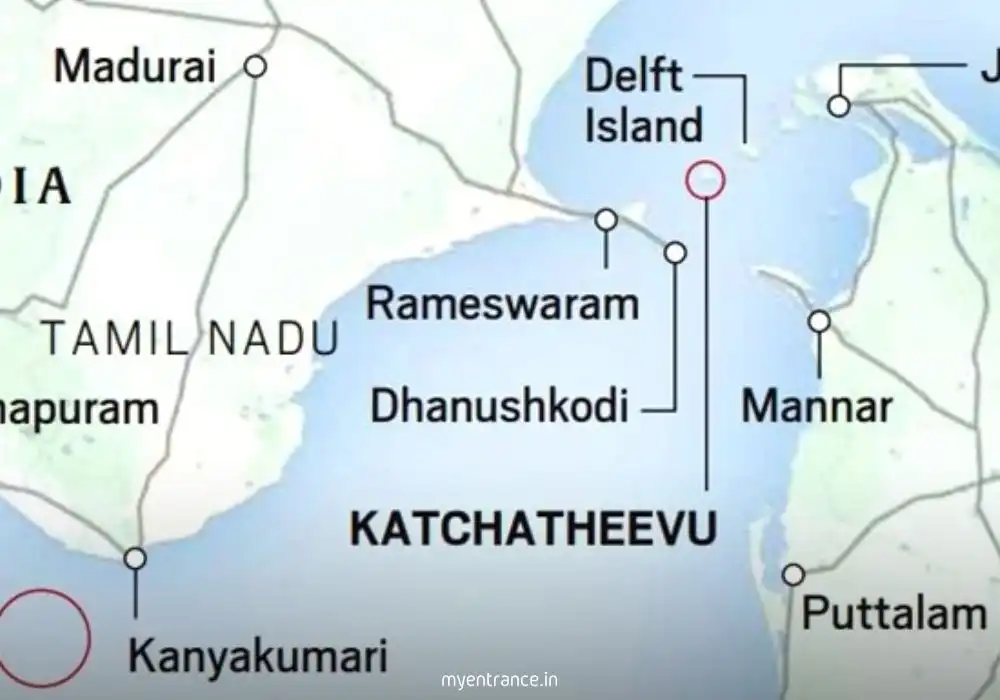
Navigating the complexities of international relations is crucial for any competitive exam aspirant. Among the many geopolitical challenges, the Katchatheevu island and the Palk Strait fisheries disputes represent a significant, ongoing issue between India and Sri Lanka. Understanding this dynamic is not just about current affairs; it delves into history, geography, international law, and socio-economic factors, making it a recurring topic for exams like UPSC, SSC, PSC, and other government recruitment tests. This comprehensive guide from MyEntrance.in breaks down this critical subject, offering you the clarity needed to ace your examinations. Our daily current events quiz for psc exams is tailored for state-level preparations.
The Strategic Importance of Palk Strait and Katchatheevu Island
What is the Palk Strait? The Palk Strait is a narrow strip of water that separates the Indian state of Tamil Nadu from the northern province of Sri Lanka. Geographically, it connects the Bay of Bengal in the northeast with the Palk Bay and then the Gulf of Mannar in the southwest. This shallow water body, though small, holds immense strategic and economic significance, primarily for fishing communities on both sides. Its unique maritime environment has historically supported a rich marine ecosystem, making it a vital fishing ground.
Where is Katchatheevu? Katchatheevu is a tiny, uninhabited island located in the Palk Strait, approximately 16 nautical miles (around 30 kilometers) northeast of Rameswaram, India. For centuries, this barren piece of land served as a traditional stopover for fishermen from both India and Sri Lanka. It was historically used for drying nets and mending boats, especially during the annual St. Anthony’s festival, which draws devotees from both nations. The island’s strategic location makes it central to the ongoing maritime boundary discussions.
The Genesis of the Disputes: Cession and its Consequences
When did the dispute originate? The core of the Katchatheevu dispute dates back to the mid-20th century. While India and Sri Lanka had generally friendly relations after their independence, the issue of maritime boundary demarcation, particularly in the Palk Strait, remained unresolved. In 1974, through a bilateral agreement, India ceded Katchatheevu island to Sri Lanka. This agreement also defined the maritime boundary between the two countries in the Palk Strait. A subsequent agreement in 1976 further clarified the fishing rights, stating that fishermen from both countries would not engage in fishing in the territorial waters of the other.
Why is this controversial? Despite the agreements, the cession of Katchatheevu remains a contentious issue in India, particularly in Tamil Nadu. Indian fishermen, who had traditionally fished around Katchatheevu for generations, felt their historical rights were curtailed. The fear was that their livelihoods would be severely impacted by being denied access to rich fishing grounds they had long utilized. This historical context forms the bedrock of the ongoing fisheries dispute.
The Ongoing Fisheries Crisis in Palk Strait
What is the fisheries dispute? The primary challenge stemming from the Katchatheevu cession is the persistent fisheries dispute. Indian fishermen, especially those from Tamil Nadu, frequently cross the International Maritime Boundary Line (IMBL) into Sri Lankan waters. Several factors contribute to this:
1. Depleted Resources: Overfishing on the Indian side of the Palk Strait has led to a significant depletion of marine resources, forcing fishermen to venture further.
2. Traditional Fishing Grounds: Many Indian fishermen consider the waters around Katchatheevu as their traditional fishing grounds, a right they believe was unjustly taken away.
3. Use of Trawlers: The use of bottom trawlers by Indian fishermen is highly destructive to the marine ecosystem, a practice banned in Sri Lanka, leading to accusations of environmental damage and competition with Sri Lankan fishermen using traditional methods.
How does it affect fishermen? When Indian fishermen cross the IMBL, they are often apprehended by the Sri Lankan Navy. This leads to arrests, detention of crew members, and confiscation of their valuable fishing boats and equipment. Such incidents cause immense distress to the fishing communities, impacting their socio-economic well-being and often leading to protests and calls for government intervention. Memorize the essential facts and figures for exam prep found in this compiled list.
India’s Diplomatic Efforts and the Way Forward
How is India addressing this? India’s foreign policy, especially its “Neighbourhood First Policy,” prioritizes amicable relations with its immediate neighbors, including Sri Lanka. Resolving the Palk Strait fisheries dispute is a key component of this policy. Both governments have engaged in various diplomatic efforts, including:
1. Bilateral Talks: Regular discussions between high-level officials and ministerial delegations from both countries aim to find mutually agreeable solutions.
2. Joint Working Group (JWG) on Fisheries: This group, comprising officials from both sides, meets periodically to address issues related to fishermen, including their release, repatriation, and sustainable fishing practices.
3. Promoting Alternative Livelihoods: India has initiated schemes to encourage deep-sea fishing and diversification of livelihoods for fishermen, aiming to reduce their dependence on traditional Palk Strait fishing grounds.
4. Technological Solutions: Exploring options like satellite-based alerts to prevent accidental crossings of the IMBL.
The path forward requires a multi-pronged approach involving continued diplomatic dialogue, promoting sustainable fishing practices, exploring alternative economic opportunities for affected communities, and ensuring the safety and welfare of fishermen from both nations. Understanding these nuances will equip you with a strong foundation for tackling related questions in your competitive exams. With our service, you will never miss an important update again.
Frequently Asked Questions (FAQs)
Q1: What is the Katchatheevu island dispute primarily about?
A1: The Katchatheevu island dispute primarily concerns the ownership of a small, uninhabited island in the Palk Strait and the subsequent impact on the traditional fishing rights of Indian fishermen, particularly after India ceded the island to Sri Lanka in 1974 through a bilateral agreement.
Q2: Why is the Palk Strait significant in India-Sri Lanka relations?
A2: The Palk Strait is significant because it is a vital fishing ground for both Indian and Sri Lankan communities. It serves as a maritime boundary, and the disputes over fishing rights and territorial waters within this strait are a recurring point of contention, impacting the bilateral relations.
Q3: When was Katchatheevu ceded to Sri Lanka?
A3: Katchatheevu island was officially ceded to Sri Lanka in 1974 through a bilateral agreement signed between the governments of India and Sri Lanka, which also demarcated the maritime boundary in the Palk Strait.
Q4: What challenges do Indian fishermen face in the Palk Strait?
A4: Indian fishermen often face challenges such as venturing into Sri Lankan territorial waters due to depleted resources on their side, leading to apprehension by the Sri Lankan Navy, arrests, detention, and confiscation of their boats and equipment, significantly impacting their livelihoods.
Q5: How is India trying to resolve the Palk Strait fisheries dispute?
A5: India is attempting to resolve the dispute through continuous diplomatic dialogue, high-level bilateral talks, meetings of the Joint Working Group on Fisheries, promoting deep-sea fishing as an alternative livelihood for fishermen, and exploring technological solutions to prevent accidental border crossings, all under its “Neighbourhood First Policy.”





