
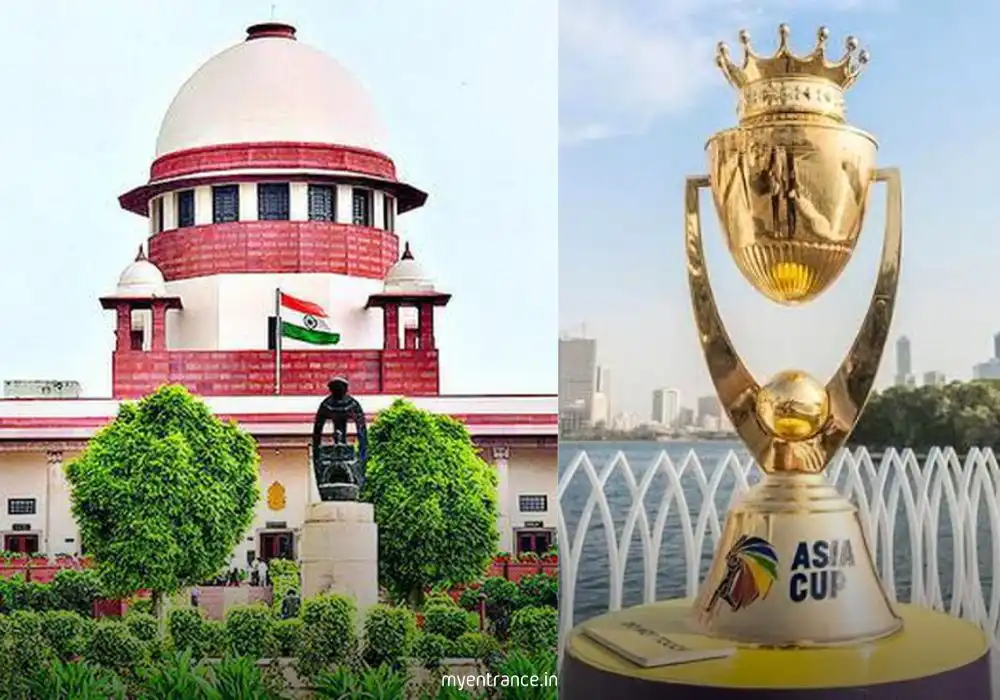
In a development closely observed by current affairs enthusiasts and candidates preparing for various government examinations, India’s Supreme Court recently weighed in on a Public Interest Litigation (PIL) concerning a high-profile cricket encounter. This incident provides a valuable learning point for understanding judicial processes, the concept of PILs, and the broader scope of the judiciary’s intervention, all critical topics for exams like UPSC, SSC, PSC, and others.
Understanding the Core of the Plea
The matter brought before the apex court was an urgent request to halt the much-anticipated India-Pakistan Asia Cup T20 match, a fixture that always draws significant attention. This specific match was scheduled to take place in Dubai on September 14th. The petitioners sought judicial intervention to cancel the event, citing various reasons which, from a legal standpoint, needed to be compelling enough for the judiciary to act. For aspirants, recognizing that such pleas often stem from public sentiment or perceived national interest is key to understanding the context of a PIL.
The Supreme Court’s Stance and Why It Matters
A distinguished bench of the Supreme Court, comprising Justices J.K. Maheshwari and Vijay Bishnoi, firmly declined to grant an expedited hearing on the matter. Their decision essentially allowed the scheduled match to proceed without judicial interference. This action by the Supreme Court serves as an excellent illustration of the principle of judicial restraint. It highlights that the judiciary, while being the guardian of the constitution and fundamental rights, typically refrains from intervening in matters that are purely administrative, political, or private in nature, especially when there’s no clear violation of law or constitutional principles.
For candidates preparing for competitive examinations, this case underscores several vital concepts. Firstly, it reiterates the role and limitations of the Supreme Court. Secondly, it clarifies what constitutes a valid ground for a Public Interest Litigation and where the court might deem it inappropriate to step in. Understanding the nuances of when and why the judiciary chooses to intervene, or not to intervene, is crucial for answering questions related to polity, governance, and current events in exams. This event, combining sports with a significant legal development, perfectly exemplifies the kind of interdisciplinary knowledge expected from aspirants. Keeping abreast of such news helps build a comprehensive understanding of how different pillars of democracy function in real-world scenarios.
Frequently Asked Questions (FAQs)
Q1: What was the primary issue presented to the Supreme Court in this case?
A: The central issue brought before the Supreme Court was a Public Interest Litigation (PIL) that sought an urgent directive for the cancellation of a high-profile India-Pakistan Asia Cup T20 cricket match.
Q2: Which specific judges presided over this plea, and what was their immediate decision?
A: A Supreme Court bench, constituted by Justices J.K. Maheshwari and Vijay Bishnoi, considered the plea. They firmly declined to list the matter for an urgent hearing, thereby allowing the scheduled cricket match to proceed as planned.
Q3: How is this news relevant for individuals preparing for competitive examinations like UPSC, SSC, or PSC?
A: This news holds significant relevance for current affairs and general knowledge sections of competitive exams. It serves as a practical example to understand key concepts such as Public Interest Litigation (PIL), the principle of judicial restraint, the functioning and jurisdiction of the Supreme Court, and the broader interplay between sports, public sentiment, and the judiciary in India.
Q4: Can you explain what a Public Interest Litigation (PIL) is and its application in this context?
A: A Public Interest Litigation (PIL) is a legal action initiated in a court of law to protect a public interest, rather than a private interest. In this specific case, the PIL was filed with the intention of serving a perceived public interest by requesting the cancellation of the match, though the Court ultimately did not find sufficient legal grounds for its intervention.
Q5: What broader principle regarding the Supreme Court’s role does its decision in this matter exemplify?
A: The Supreme Court’s decision vividly illustrates the principle of judicial restraint. This principle suggests that the judiciary generally avoids interfering in policy matters, administrative decisions, or private arrangements like sporting events, unless there is a clear violation of law, constitutional rights, or a compelling legal reason, thereby reinforcing its role as an interpreter of law rather than an overseer of all public activities.





