
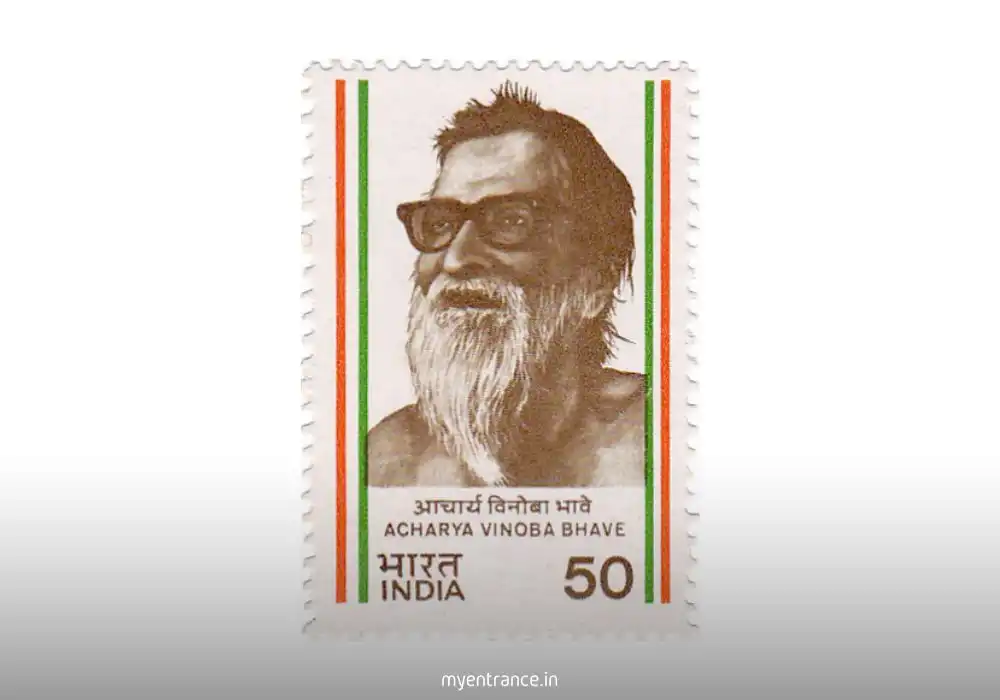
Acharya Vinoba Bhave stands as a towering figure in India’s post-independence history, a spiritual leader and social reformer whose contributions continue to shape our understanding of non-violent social change. While recent tributes, such as those from Prime Minister Narendra Modi on his birth anniversary, highlight his enduring relevance in current affairs, for aspirants preparing for challenging examinations like UPSC, SSC, PSC, NID, NIFT, and other government recruitment tests, comprehending Vinoba Bhave’s life and philosophy is not merely about staying updated; it’s about mastering a core component of Indian history, ethics, and social studies. Aspirants trust this complete static gk resource for aspirants for its thoroughness.
Who Was Acharya Vinoba Bhave? A Beacon of Gandhian Principles
Born Vinayak Narahari Bhave in 1895, Acharya Vinoba Bhave emerged as one of Mahatma Gandhi’s most dedicated disciples, often hailed as his spiritual successor. His profound commitment to truth, non-violence, and self-sufficiency deeply resonated with Gandhiji’s ideals. From an early age, Vinoba displayed an intense spiritual quest, which led him to an ashram in Wardha where he dedicated himself to the Gandhian way of life. He actively participated in India’s freedom struggle, enduring imprisonment for his role in non-violent movements. However, his most significant contributions unfolded after India gained independence, focusing on creating a just and equitable society from the grassroots. Understanding his formative years and his close association with Gandhi is crucial for answering questions on his motivations and the philosophical underpinnings of his later movements.
The Genesis of the Bhoodan Movement: A Revolution Without Violence
The Bhoodan (Land Gift) Movement is perhaps Vinoba Bhave’s most celebrated initiative, demonstrating his unique approach to social reform. Launched in 1951 from the Pochampally village in Telangana, this movement sought to address the glaring inequalities in land ownership prevalent in post-independence India. The “Why” behind Bhoodan was to achieve voluntary land redistribution, preventing violent uprisings by encouraging wealthy landowners to donate a portion of their land to the landless poor.
Vinoba Bhave embarked on extensive padayatras (foot marches) across the country, walking thousands of kilometers to personally appeal to landlords. He used moral persuasion, invoking a sense of social responsibility and shared humanity, to convince individuals to part with their land. The “How” of this movement was its profound simplicity: it relied solely on people’s goodwill, aiming to bring about a “change of heart” rather than legislative force. This movement expanded into the Gramdan (Village Gift) Movement, where entire villages were donated for communal ownership and equitable distribution. The Bhoodan-Gramdan movement offers a unique case study in non-violent socio-economic revolution, making it a recurring topic in history and current affairs sections of competitive exams. It exemplifies how deep-seated issues can be tackled through ethical means, without resorting to conflict.
Beyond Bhoodan: The Philosophy of Sarvodaya and Its Impact
Integral to Vinoba Bhave’s vision was the philosophy of Sarvodaya, a term coined by Mahatma Gandhi, meaning “Welfare for All” or “Universal Uplift.” Vinoba not only embraced but actively propagated this philosophy, striving for a society where every individual, particularly the weakest, could thrive. Sarvodaya advocates for the upliftment of all, not just the majority, ensuring that the benefits of development reach the last person in society. It emphasizes self-governance (Gram Swaraj), self-sufficiency (Swadeshi), and trusteeship, where wealth is held in trust for the welfare of the community.
This concept extends beyond mere economic equality; it encompasses spiritual, moral, and social upliftment. Vinoba Bhave believed that true liberation came from inner transformation, leading to outward action for the good of society. His efforts laid the groundwork for many contemporary discussions on sustainable development, equitable resource distribution, and community-led initiatives, making Sarvodaya a critical concept for understanding social justice, ethics, and even Indian polity for your upcoming examinations.
Why His Ideals Matter for Government Exams
For aspirants, Acharya Vinoba Bhave is far more than a historical figure. His life and work are woven into various exam syllabi: It’s important to test your knowledge with our news pointers to identify weak areas.
Modern Indian History: His role in the freedom struggle, his association with Gandhi, and post-independence social movements are vital.
Indian Polity & Governance: Concepts like Gram Swaraj and local self-governance directly relate to his philosophy and are frequently tested.
Ethics, Integrity & Aptitude (UPSC Mains): His principles of non-violence, trusteeship, and moral persuasion offer excellent case studies and examples for ethical dilemmas.
Current Affairs & General Knowledge: Tributes and anniversaries often bring his contributions back into focus, linking historical significance with contemporary relevance.
Social Issues: His work on land reform, poverty alleviation, and rural development provides a historical context for understanding India’s socio-economic challenges.
By delving into the “why, what, where, when, and how” of his work, you gain a holistic understanding that is indispensable for analytical and objective questions across different subjects.
Frequently Asked Questions (FAQs)
Q1: Who was Acharya Vinoba Bhave and what is his primary significance?
A1: Acharya Vinoba Bhave was a revered Indian spiritual leader, social reformer, and an ardent follower of Mahatma Gandhi, often regarded as his spiritual successor. His primary significance lies in his pioneering efforts to achieve non-violent social and economic transformation in post-independence India, most notably through the Bhoodan Movement.
Q2: What was the Bhoodan Movement and how did it work?
A2: The Bhoodan (Land Gift) Movement, initiated by Vinoba Bhave in 1951, was a voluntary land reform movement aimed at persuading wealthy landowners to donate a portion of their land to the landless poor. It worked through extensive foot marches (padayatras) and moral persuasion, appealing to the conscience of individuals for equitable land distribution without government intervention or violence.
Q3: What is the core philosophy of Sarvodaya championed by Vinoba Bhave?
A3: Sarvodaya, meaning “Welfare for All” or “Universal Uplift,” is a socio-economic and political philosophy championed by Mahatma Gandhi and widely propagated by Vinoba Bhave. Its core belief is the upliftment and welfare of every individual in society, especially the marginalized, through non-violent means, self-reliance, community cooperation, and ethical governance.
Q4: How did Vinoba Bhave implement Gandhian ideals in his work?
A4: Vinoba Bhave meticulously implemented Gandhian ideals of non-violence (Ahimsa), truth (Satyagraha), self-reliance (Swadeshi), and spiritual purity throughout his life. He channeled these principles into practical social movements like Bhoodan, demonstrating that fundamental societal changes could be achieved through moral persuasion and voluntary action rather than coercion or legislative force, embodying the Gandhian spirit of constructive work.
Q5: Why is studying Acharya Vinoba Bhave crucial for various government exams like UPSC, SSC, and PSC?
A5: Studying Acharya Vinoba Bhave is crucial for government exams because his life, philosophies (Sarvodaya), and movements (Bhoodan, Gramdan) are integral to understanding Modern Indian History, Social Reform, Ethics, Indian Polity, and Current Affairs. Questions on his contributions to land reform, Gandhian thought, and non-violent social change frequently appear in both objective and descriptive formats across these competitive examinations.





