
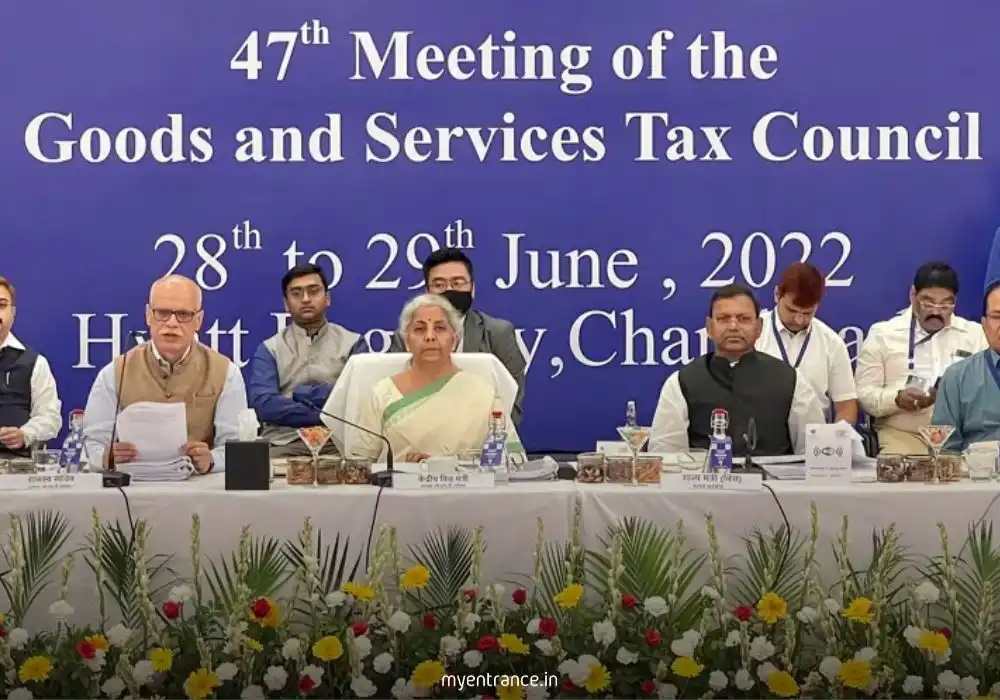
The Goods and Services Tax (GST) Council, a formidable constitutional body, has once again reshaped India’s indirect tax landscape in its most recent meeting. Understanding the nuances of these decisions is not merely an academic exercise; it is a critical requirement for aspirants aiming to conquer competitive examinations like the UPSC, SSC, and various State PSCs.
Understanding the GST Council: The Engine of India’s Tax Reform
Before delving into the specific outcomes of the latest meeting, it is imperative to grasp the constitutional and functional identity of the GST Council. Established under Article 279A of the Indian Constitution, the GST Council is the principal decision-making body for GST. It is a brilliant example of cooperative federalism, chaired by the Union Finance Minister and comprising Finance Ministers of all states and union territories as its members. The council’s mandate is to make recommendations to the Union and the States on crucial issues such as the GST rates, exemptions, threshold limits, and the formulation of GST laws. Every decision is taken with a three-fourths majority of the weighted votes of the members present, with the Centre holding one-third of the vote share and the states collectively holding two-thirds. This structure ensures that both the central and state governments have a say in shaping India’s most significant tax reform. Take your daily dose of current affairs to stay informed and prepared.
Decoding Key Decisions of the Recent Meeting
The latest council congregation brought forth several pivotal changes aimed at streamlining processes and rationalizing the tax structure. A major highlight was the recalibration of GST rates on specific services related to railways, including platform tickets and facility usage, which have been exempted to ease the burden on the common citizen. Furthermore, the council provided much-needed clarity on the taxability of corporate guarantees between parent and subsidiary companies, setting a uniform valuation rule to prevent litigation and promote ease of doing business. In a move to support small and medium enterprises, the council also announced an amnesty scheme for filing appeals, providing a window for taxpayers who missed earlier deadlines, thereby fostering a more compliant and less punitive tax environment. These decisions reflect a strategic approach towards balancing revenue augmentation with taxpayer convenience.
Beyond the Headlines: The Concept of Compensation Cess
A frequently discussed yet often misunderstood component of the GST framework is the Compensation Cess. This cess is levied on select luxury and demerit goods, such as tobacco, high-end automobiles, and aerated drinks, over and above the applicable GST rate. The primary objective behind its introduction was to create a corpus to compensate states for any revenue loss they might incur during the first five years (2017-2022) of the GST implementation. This was a constitutional guarantee to persuade states to come on board for the ‘One Nation, One Tax’ regime by subsuming their local levies. While the initial five-year period for compensation has concluded, the council has extended the levy of the cess to clear the loans that were taken to meet the revenue shortfall during the COVID-19 pandemic. You can easily access gk resources and quizzes by navigating our site.
Why is This Crucial for Your Examination Preparation?
For any serious aspirant, topics related to the Indian Economy, Polity, and Current Affairs are non-negotiable, and the GST Council lies at the intersection of all three. In preliminary exams, you can expect direct questions on the constitutional article (279A), the composition of the council, and the voting mechanism. For mains examinations, especially UPSC and State PSCs, the questions become more analytical. You may be asked to critically evaluate the role of the GST Council in fostering fiscal federalism, analyze the economic impact of its recent decisions, or discuss the challenges in GST implementation. Staying updated with these meetings through resources like our daily news quiz and current affairs modules ensures you are not just memorizing facts, but building a conceptual understanding of India’s economic governance.
Sample Questions and Answers for Practice
Question 1: Under which Article of the Indian Constitution was the GST Council formed?
Answer: The GST Council was constituted under Article 279A of the Indian Constitution, which was introduced by the 101st Constitution Amendment Act, 2016.
Question 2: What is the required majority for a decision to be passed in a GST Council meeting?
Answer: A decision in the GST Council meeting requires a majority of not less than three-fourths (75%) of the weighted votes of the members present and voting. The vote of the Central Government has a weightage of one-third of the total votes cast, and the votes of all the State Governments combined have a weightage of two-thirds.
Question 3: What was the primary purpose of introducing the GST Compensation Cess?
Answer: The primary purpose of the GST Compensation Cess was to provide a guaranteed financial cushion to the states. It was levied to create a dedicated fund to compensate states for any potential revenue loss they might suffer during the first five years of GST implementation due to the subsuming of their various indirect taxes into the single GST framework.
Question 4: How does the functioning of the GST Council exemplify the principle of cooperative federalism?
Answer: The GST Council is a prime example of cooperative federalism as it provides a joint forum for both the Centre and the states to deliberate and make decisions on a matter of joint interest—indirect taxation. Its consensus-based decision-making process, where states hold a two-thirds voting share, ensures that the central government cannot unilaterally impose its will, fostering a collaborative spirit in fiscal policy-making.
Question 5: Based on the recent meeting, how are the council’s decisions aiming to facilitate ease of doing business?
Answer: The recent decisions, such as providing legal clarity on the taxability of corporate guarantees and introducing an amnesty scheme for filing appeals, directly contribute to the ease of doing business. These measures reduce ambiguity, prevent potential litigation, and offer relief from procedural complexities, especially for smaller businesses, thus creating a more predictable and friendly tax environment.





