Translate Language
How Will India’s New Critical Mineral Recycling Scheme Boost EV and Electronics Sectors?
In a significant move towards self-reliance, the Indian government has launched a ₹1,500 crore scheme to promote the recycling of critical minerals. This initiative is designed to strengthen the domestic supply chain for essential resources and is a crucial topic for aspirants of exams like UPSC, SSC, and various PSCs.
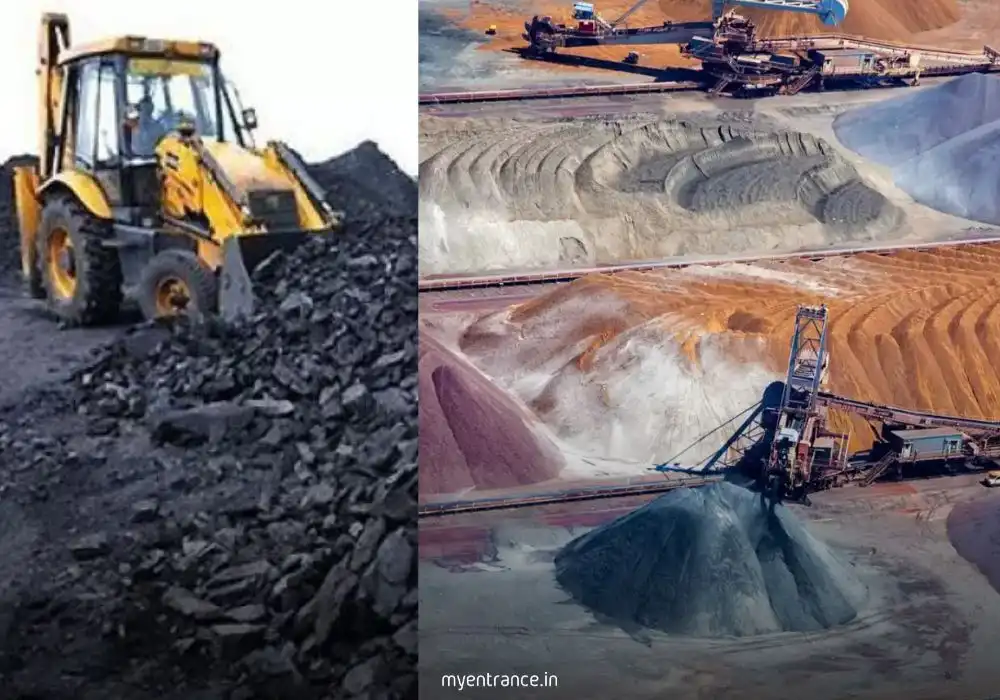
The Indian government, under the leadership of Prime Minister Narendra Modi, has given the green light to a major new policy: a ₹1,500 crore incentive scheme to supercharge the country’s recycling industry. But this isn’t just about managing waste. The core mission is far more strategic.
So, which is the objective of this scheme?
The primary objective is to build a secure and resilient domestic supply of critical minerals—such as lithium, cobalt, nickel, and rare earth elements. These minerals are the lifeblood of modern technologies, powering everything from electric vehicles (EVs) and smartphones to defence equipment and renewable energy infrastructure.
Currently, India depends heavily on imports for these minerals. The process of discovering new mines, auctioning them, and starting production takes many years. This scheme identifies recycling as a faster, more sustainable, and strategic alternative. By extracting valuable minerals from our existing e-waste, old lithium-ion batteries, and other scrap (like catalytic converters from end-of-life vehicles), we can create a circular economy that reduces foreign dependence and bolsters national security.
Key Features of the Scheme:
Tenure: The scheme will run for six years, from the financial year 2025-26 to 2030-31.
Who Can Benefit? The scheme is designed for both large, established recycling companies and small new players, including start-ups. In fact, a dedicated portion (one-third) of the funds is reserved specifically for these smaller entities.
Type of Support: It offers financial incentives for setting up new recycling plants, expanding existing ones, or modernizing current facilities. The support is targeted at units that actually extract the critical minerals, not just those that produce an intermediate product called ‘black mass’.
Stay ahead in your preparation with Daily Current Affairs & GK Updates tailored for competitive exams.
Incentive Structure:
Capital Subsidy: A 20% subsidy on the cost of machinery and equipment to help set up the necessary infrastructure.
Operational Subsidy: An additional incentive based on the incremental sales of recycled minerals, paid out over the scheme’s duration.
Caps on Incentives: To ensure the benefits are distributed widely, there is a cap on the total amount a single company can receive. Large entities can get up to ₹50 crore, while small entities are capped at ₹25 crore.
The government expects this scheme to trigger around ₹8,000 crore in new investments, create nearly 70,000 jobs, and establish a robust annual recycling capacity that will significantly boost India’s production of these vital minerals.
Industry leaders have hailed the move. Nitin Gupta of Attero called it a “game changer for India’s circular economy,” highlighting that it fast-tracks the path to an ‘Atmanirbhar Bharat’. Similarly, Shubham Vishvakarma of Metastable Materials noted that it provides a clear roadmap for innovators to scale up and directly contribute to national strategy.
Questions and Answers for Your Exam Preparation:
1. What is the primary objective of the recently approved ₹1,500 crore incentive scheme for critical mineral recycling?
Answer: The primary objective is to develop domestic capacity for recycling critical minerals from secondary sources like e-waste and lithium-ion batteries to ensure supply chain resilience and reduce India’s dependence on imports.
2. For how long is the critical mineral recycling scheme valid?
Answer: The scheme has a tenure of six years, from the financial year 2025-26 to 2030-31.
3. The scheme aims to benefit which two categories of recyclers specifically?
Answer: The scheme aims to benefit both large, established recyclers and small, new recyclers, including start-ups.
4. Name two specific types of waste materials identified as eligible feedstock under this scheme.
Answer: E-waste and Lithium-ion Battery (LIB) scrap are two key eligible feedstocks.
5. How does this recycling scheme align with the goal of an ‘Atmanirbhar Bharat’ (Self-Reliant India)?
Answer: It aligns by creating a domestic, sustainable source of critical minerals essential for high-tech and green industries, thereby reducing import dependency and strengthening economic sovereignty.
Strengthen your current affairs with our Daily GK Quiz Practice Questions to boost exam confidence.
Why is this Important for Exams?
This topic is extremely important for competitive exams like UPSC, SSC, Kerala PSC, and others for several reasons:
Government Schemes: Questions on newly launched government initiatives, especially in the sectors of economy, environment, and technology, are very common.
Current Affairs: It is a major recent cabinet decision with long-term implications for India’s industrial and environmental policy.
Key Themes: It touches upon multiple high-priority themes for India:
Economy: Import substitution, investment, and job creation.
Environment: E-waste management, circular economy, and sustainability.
Science & Technology: Critical minerals, EV ecosystem, and electronics manufacturing.
Internal Security: Reducing dependency on other countries for strategic resources.
Understanding the objectives, features, and significance of this scheme will give you a definite edge in both the prelims and mains examinations.
Read More Topics