Translate Language
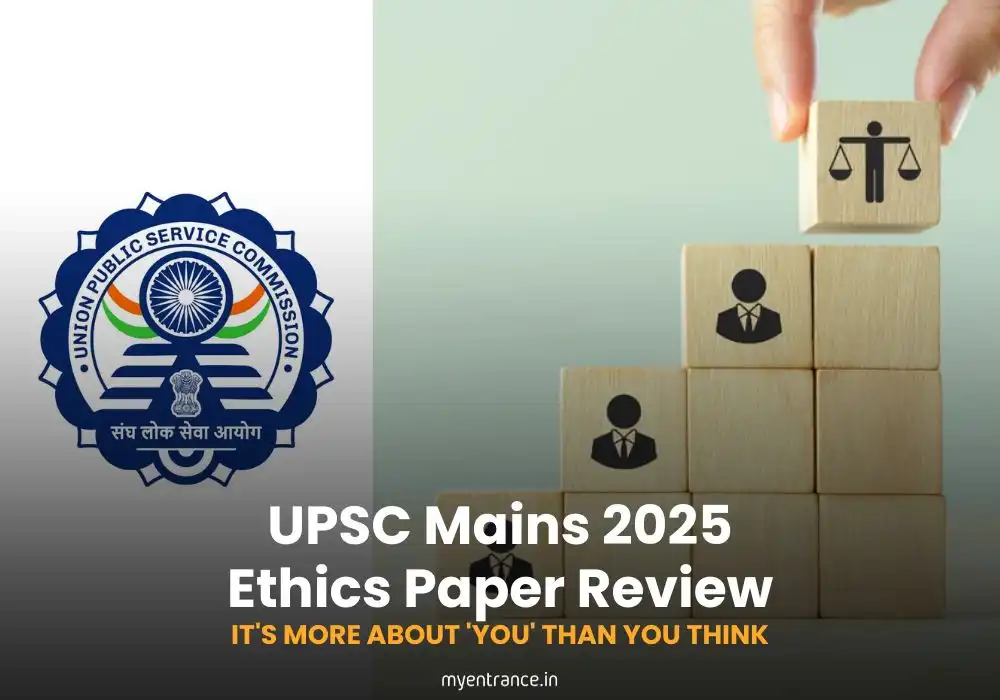
UPSC Mains 2025 Ethics Paper Review: Is Your Personality Your Biggest Asset?
The UPSC Mains 2025 Ethics Paper (GS-IV) has once again proven that it is far more than a theoretical exam. It serves as a mirror, compelling aspirants to reflect on their own ethical foundations and their role in society. This review breaks down the paper’s core message and what it means for your preparation strategy.
UPSC Mains 2025 Ethics Paper: A Strategic Review for Aspirants
If you approached the UPSC Ethics paper as just another subject to memorize, the 2025 edition likely presented a significant challenge. This paper has consistently evolved since its introduction, and this year, it sent a clear, powerful message: true ethics is about applied wisdom, not just academic knowledge.
The examiners designed the paper to evaluate a holistic model—Knowledge, Behaviour, and Competency (KBC). This means simply defining terms like ‘integrity’ or ’emotional intelligence’ is no longer enough. The paper demands that you demonstrate how these concepts translate into real-world action and decision-making.
Stay ahead in your preparation with Daily Current Affairs & GK Updates tailored for competitive exams.
Key Focus Areas from the 2025 Paper:
From Abstract to Concrete: The paper brilliantly connected timeless philosophical ideas (like Schopenhauer’s introspection or the constitutional value of “We the people”) to pressing contemporary issues. Questions touched upon the ethics of social media, environmental dilemmas, and geopolitical conflicts, asking you to ground philosophical concepts in modern reality.
Emotional Intelligence as a Core Skill: There was a pronounced emphasis on the practical application of Emotional Intelligence (EI). This wasn’t just about defining EI dimensions but showcasing self-awareness, managing stress, adapting to change, and maintaining a positive attitude in challenging bureaucratic scenarios.
The Constitution as a Moral Compass: Concepts like Constitutional Morality and ethical governance were central. The paper expects you to view the Constitution not just as a legal document but as a framework for ethical conduct in public life.
Bridging the Gap: A recurring theme was the critical link between personal values and professional competency. The paper questions how you would resolve conflicts—be it between developmental goals and environmental conservation, between rules and senior pressure, or between personal and professional duties.
The Case Studies (Part B) were meticulously chosen to reflect the messy, complex dilemmas an officer faces. They tested your ability to:
Navigate humanitarian challenges in sensitive areas like borders.
Address corruption in government schemes effectively.
Balance ecological concerns with urgent welfare needs.
Manage conflicts of interest with integrity and wisdom.
Ultimately, the 2025 Ethics paper was a call to become a transformational leader. It suggests that your answers, and indeed your future career, should be driven by a purpose larger than just clearing an exam. It reminds every aspirant that the true “light is within” (Lux in intimo est)—your character is your most powerful tool.
Sample Questions and Answers Based on 2025 Trends
1. Question: What do you understand by ‘ethical competence’? Differentiate it from mere ethical knowledge.
Answer: Ethical knowledge refers to the theoretical understanding of ethical principles, theories, and terminologies. It is about knowing what is right. Ethical competence, however, is the demonstrated ability to apply this knowledge in complex, real-world situations to make just and fair decisions. It involves skills like moral reasoning, emotional intelligence, courage, and perseverance to actually do what is right, especially under pressure.
2. Question: “Rules and laws alone cannot ensure ethics in governance.” Comment.
Answer: While rules and laws provide a essential foundational framework for governance, they are primarily external and punitive in nature. True ethics in governance originates from an internalized value system and a moral compass within each civil servant. Laws can punish wrongdoing after it occurs, but they cannot inspire integrity, compassion, or proactive responsibility. Ethical governance is ensured by a culture of integrity, lead by example, and a commitment to public service that goes mere legal compliance.
3. Question: How can emotional intelligence aid in resolving an ethical dilemma in public administration?
Answer: Emotional Intelligence (EI) is crucial in navigating ethical dilemmas. Its components directly aid resolution:
Self-Awareness: Helps recognize one own biases and values that might influence the decision.
Empathy: Allows understanding the perspectives and sufferings of all stakeholders affected by the dilemma.
Self-Regulation: Prevents impulsive reactions, allowing for a calm, reasoned analysis based on principles rather than pressure or anger.
This leads to more inclusive, fair, and humane outcomes.
4. Question: Illustrate with an example how a conflict between environmental ethics and development goals can be resolved.
Answer: A classic conflict arises when a dam project promises irrigation and power (development) but will displace a tribal population and submerge a forest (environmental/ethical concern). A resolution rooted in ethical thinking would not be a binary choice. It would involve:
Participative Decision-Making: Free, prior, and informed consent of affected tribes.
Sustainable Alternatives: Exploring smaller, less disruptive projects or alternative energy sources.
Rehabilitation: A genuine, compassionate rehabilitation policy that ensures a better quality of life.
Cost-Benefit Analysis: Weighing long-term ecological costs against short-term developmental gains.
5. Question: What is meant by ‘constitutional morality’?
Answer: Constitutional morality, a concept emphasized by Dr. B.R. Ambedkar, goes beyond following the constitutional text. It refers to a paramount commitment to the overarching principles of the Constitution—justice, liberty, equality, fraternity, and the dignity of the individual. It involves cultivating a spirit of democracy, pluralism, and compassion, ensuring that the state’s actions always align with the noble vision of the Constitution, even in the absence of specific laws.
Build a strong foundation with our Comprehensive Static GK Guide that covers important topics for all exams.
Why is This Analysis Important for Your Exams?
Understanding the depth and pattern of the UPSC Ethics paper is non-negotiable for serious aspirants. Here’s why:
Shifts Preparation Strategy: It moves your preparation from passive reading to active introspection. You start building a repository of personal examples and thoughtful opinions.
Improves Answer Writing: Knowing that examiners value applied knowledge helps you frame answers with relevant examples, case studies, and actionable solutions, which score higher marks.
Builds a Foundational Mindset: The ethics paper is ultimately about shaping your character for a career in civil service. Engaging with these ideas sincerely doesn’t just help you clear the exam; it prepares you for the job itself.
Stays Ahead of the Curve: UPSC is increasingly focusing on situational and application-based questions. This review helps you anticipate the nature of future questions, not just for UPSC but for other state PSCs (Kerala PSC, etc.) that incorporate similar ethics and integrity topics.
For exams like SSC, UPSC, and Kerala PSC, the ability to articulate a clear, thoughtful, and ethical perspective is what distinguishes a topper from the crowd. Start your journey of ethical thinking today.
Read More Topics