Translate Language
Syllabus of Kerala PSC Degree Level Exam: A Complete Preparation Guide
The Kerala PSC Degree Level Exam is one of the most competitive recruitment tests in the state, attracting thousands of aspirants every year. Understanding the detailed syllabus is the first and most crucial step in exam preparation. In this guide, we break down the KPSC Degree Level Exam Syllabus topic by topic, making it easier for you to plan your studies effectively.
Detailed Syllabus for KPSC Degree Level Exam
Part I (A) History
Kerala History: Arrival of Europeans, contributions of different powers, Travancore history from Marthanda Varma to Sree Chithirathirunal, reform movements, Kerala’s role in the freedom struggle, literary sources, political and social changes post-1956.
Indian History: Medieval India, British rule, First War of Independence, Indian National Congress, Swadeshi Movement, Gandhian era, post-independence India, state reorganization, political, scientific, and educational developments.
World History: English Revolution, American War of Independence, French, Russian, and Chinese Revolutions, aftermath of World War II, UNO and international organizations.
Part I (B) Geography
General Concepts: Earth structure, atmosphere, landforms, climate, seasons, global warming, pollution, maps, GIS, oceans, and continents.
India: Physiographic divisions, rivers, plains, plateaus, coasts, natural vegetation, agriculture, minerals, industries, energy, and transport systems.
Kerala: District features, rivers, wildlife, agriculture, industries, energy, transport, and research centers.
+ Current Affairs
Take a Free Mock Test for Kerala PSC Exam here. Use Code WELCOME28 during checkout to access 3 months membership plan totally free.
Part I (C) Economics
National Income, Per Capita Income, factors of production, economic sectors, planning (Five-Year Plans, NITI Aayog), RBI functions, taxation, public expenditure, budget, fiscal policy, and consumer rights.
Part I (D) Civics
Public Administration, Indian & State Civil Services, RTI Act, Lokpal, governance (Executive, Judiciary, Legislature), elections, political parties, human rights, welfare schemes, employment policies, women & child protection.
Part I (E) Indian Constitution
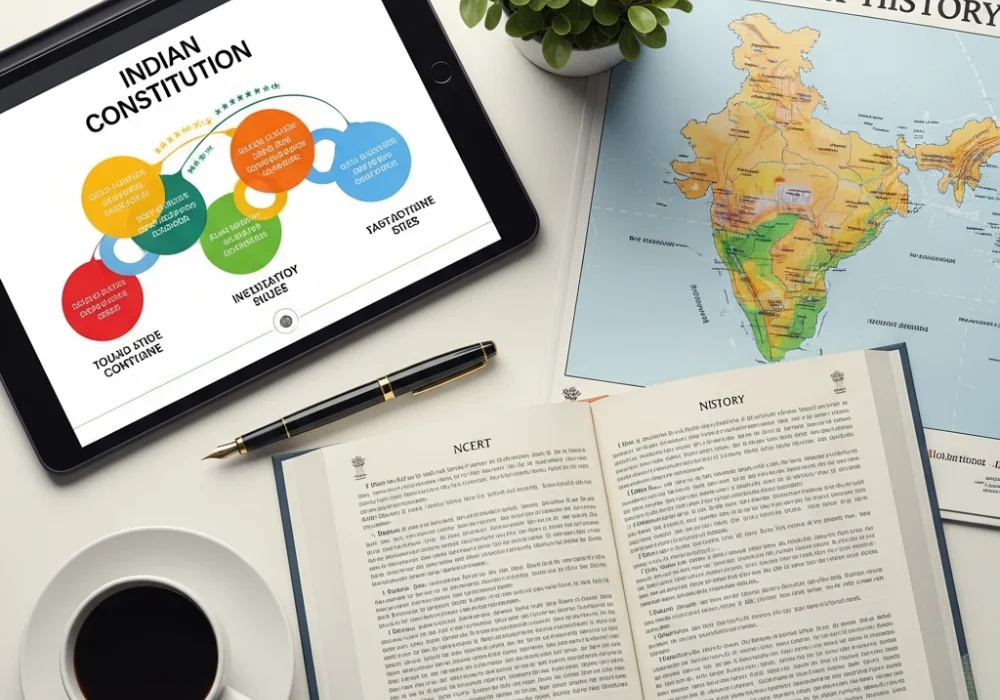
Constituent Assembly, Preamble, Fundamental Rights, Duties, Directive Principles, citizenship, constitutional amendments, Panchayati Raj, constitutional bodies, emergency provisions, division of powers (Union, State, Concurrent lists).
Part I (F) Arts, Sports & Literature
Arts (കല): Kerala’s major performing arts, training centers, artists, writers, cinema history, national award winners.
Sports (കായികം): Major Indian, Kerala & world athletes, Olympic history, Asian Games, Commonwealth Games, national sports events, trophies, awards.
Literature (സാഹിത്യം): Malayalam literary movements, famous works, authors, pen names, awards like Jnanpith, Malayalam cinema milestones.
Culture (സംസ്കാരം): Kerala’s major festivals, cultural institutions, temples, contributions of cultural icons.
Part I (G) Computer Science
Basics of Computer: Hardware, software, OS, applications, programming basics.
Networks & Internet: LAN/WAN, routers, switches, social media, search engines, basics of web designing.
Cyber Security: Cybercrimes, IT Act, legal awareness.
+ Current Affairs
Part I (H) Science & Technology
Basics of everyday science, human body, nutrition, healthcare.
Indian science institutions, ISRO, DRDO, space and defense technologies.
Energy resources, renewable vs non-renewable, India’s energy policy.
Environmental issues, climate change, biodiversity, forest & wildlife laws, biotechnology, nanotechnology.
+ Current Affairs
Part II – Arithmetic & Mental Ability
Arithmetic: Numbers, fractions, percentage, profit-loss, interest, ratio, distance-time, work, averages, progressions, mensuration.
Mental Ability: Series, analogies, coding-decoding, odd one out, relations, direction sense, calendar & clock problems, clerical ability.
Part III – Languages
English: Grammar, tenses, articles, verbs, speech, voices, vocabulary, synonyms, antonyms, idioms, abbreviations.
Malayalam (മലയാളം): പദശുദ്ധി, വാക്യശുദ്ധി, പരിഭാഷ, പര്യായം, പഴഞ്ചൊല്ലുകൾ, സ്ത്രീലിംഗം, വചനം.
Kannada & Tamil: Word usage, translation, synonyms, antonyms, gender classification, idioms, proverbs.
+ Current Affairs
FAQs on KPSC Degree Level Exam Syllabus
1. What is the main focus of Kerala PSC Degree Level Exam?
The exam mainly tests knowledge in History, Geography, Economics, Civics, Constitution, General English, Regional Languages, Arithmetic, and Current Affairs.
2. How should I start preparing for the exam?
Start with understanding the syllabus, divide subjects into daily targets, and practice mock tests regularly.
3. Is Malayalam compulsory in the exam?
Yes, Malayalam is part of the regional language section, but candidates can also choose Tamil or Kannada.
4. Does Current Affairs play a big role in the exam?
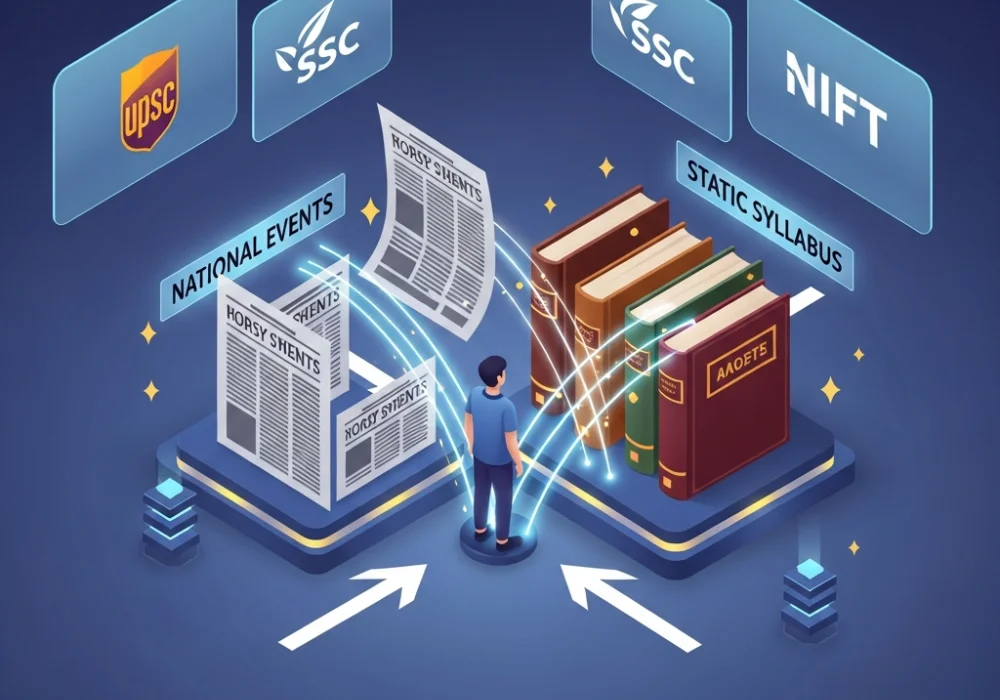
Absolutely. Almost every section is linked with Current Affairs, so regular updates are essential.
5. How can mock tests help in preparation?
Mock tests help identify weak areas, improve speed and accuracy, and give you a real exam-like experience.
Why is the Syllabus Important for Kerala PSC Exams?
Knowing the syllabus for KPSC Degree Level Exam is like having a roadmap for preparation. Without it, you may waste time on unnecessary topics. By following the official syllabus, you can:
Focus only on relevant topics.
Create a structured study plan.
Improve your chances of scoring high.
Or in simple words, “Syllabus മനസ്സിലാക്കിയാൽ preparation half work done!”
Take a Free Mock Test for Kerala PSC Degree Level Exam here. Use Code WELCOME28 during checkout to access 3 months membership plan totally free.
Read More Topics