Translate Language
What is the ‘One Nation, One Subscription’ (ONOS) Scheme and Can It Replace Sci-Hub for Indian Researchers?
The digital access to academic research stands at a critical juncture in India. A recent court ruling has shut down a popular, albeit controversial, gateway to knowledge. This development forces a re-evaluation of how India’s students and researchers will access the information vital for national-level examinations and academic excellence.
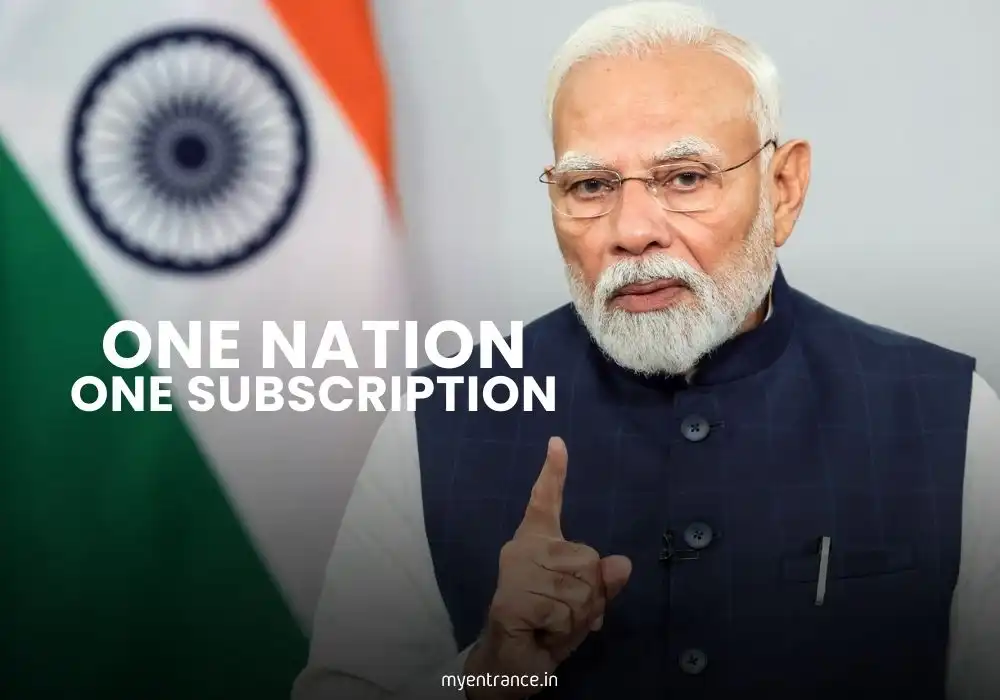
The Sci-Hub Verdict and the Rise of ONOS: A New Chapter for Indian Academia
The Delhi High Court’s decision to block access to Sci-Hub marks a significant moment, concluding a long legal battle initiated by major international publishers like Elsevier and Wiley. While the court’s ruling on copyright infringement is legally sound, it overlooks the fundamental dysfunction within the academic publishing ecosystem. This system sees publicly-funded research being reviewed by unpaid academics, only for the resulting journals to be sold back to institutions at exorbitant subscription fees, creating a significant barrier to access. In response to this very problem, the Indian government has proposed the ‘One Nation, One Subscription’ (ONOS) scheme. With an initial outlay of ₹6,000 crore, ONOS aims to negotiate a unified, national-level subscription with over 30 major publishers, granting thousands of public institutions access to a vast repository of over 13,000 journals. However, the scheme faces scrutiny for its high cost in an era moving towards open access, its exclusion of private institutions and independent researchers in its first phase, and its failure to address the core issue of Indian researchers having to surrender copyrights of their work to foreign publishers.
Questions and Answers from this Article
1. What was the core reason behind the Delhi High Court’s order to block Sci-Hub?
The court ruled that Sci-Hub and its mirror sites were in violation of copyright laws by illegally distributing research papers owned by publishers like Elsevier and Wiley, thus upholding the publishers’ intellectual property rights.
2. Why is the traditional academic publishing model considered problematic by many experts?
It is considered problematic because the research and peer-review process is largely funded by public money and conducted by unpaid academics, yet the publishers charge institutions extremely high subscription fees, resulting in profit margins of 30% or more.
3. What is the primary objective of the ‘One Nation, One Subscription’ (ONOS) scheme?
The primary objective of ONOS is to provide a bulk subscription to thousands of international journals for Indian public research and academic institutions, thereby ensuring equitable and free access for their students and researchers.
4. How much funding has been allocated to the ONOS scheme for its first phase?
The Union Cabinet has approved an outlay of ₹6,000 crore for the first phase of the ONOS scheme, which covers the period from 2023 to 2026.
5. What is a major limitation of the ONOS scheme in its initial phase?
A major limitation is that it currently excludes researchers at private institutions and independent scholars, who will still have to pay high fees or seek alternative means to access journal articles.
6. How does the global trend towards open access challenge the ONOS model?
With mandates in the US and EU requiring federally funded research to be openly accessible, paying crores for a closed subscription model could make ONOS an expensive and outdated approach.
7. Does the ONOS scheme solve the issue of copyright transfer for Indian researchers?
No, the article states that ONOS does not address this structural flaw, and Indian researchers will continue to be forced to transfer the copyrights of their own work to foreign journals.
Why is this Important for SSC, UPSC, PSC, NID, NIFT, and Other Government Exams?
Understanding the dynamics of knowledge access is crucial for serious aspirants. Exams like UPSC, PSC, and SSC increasingly demand analytical depth and current awareness, which often requires consulting primary research and high-quality secondary analysis found in academic journals. The shift from an informal system (Sci-Hub) to a formal, state-driven one (ONOS) directly impacts your study strategy. It represents a core government policy in the education and research sector, a potential question topic in itself for current affairs and governance sections. Furthermore, for design exams like NID and NIFT, access to international design journals and research is invaluable for building a strong portfolio and knowledge base. This issue touches upon themes of intellectual property rights, digital access, and public policy—all key areas for any discerning civil service and government exam candidate.
Read More Topics