
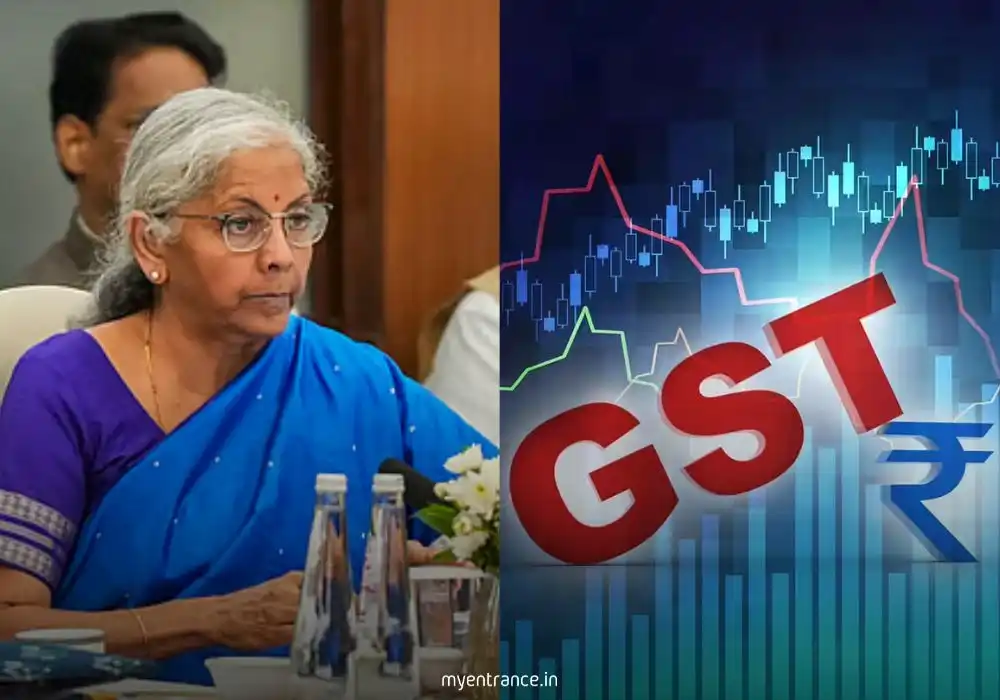
The Goods and Services Tax (GST) Council stands as the cornerstone of India’s indirect tax regime, a powerful federal body responsible for shaping the nation’s tax landscape. Understanding its functions and recent decisions, such as those from the pivotal 56th meeting, is non-negotiable for any serious civil services or government exam aspirant. This body’s recommendations influence everything from the price of daily goods to the fiscal health of our states. A great strategy is to build a strong foundation in static gk early in your preparation.
Demystifying the GST Council’s Structure and Mandate
Established under Article 279A of the Indian Constitution, the GST Council is a prime example of cooperative federalism in action. It is chaired by the Union Finance Minister, with the Union Minister of State for Finance and the Finance or Taxation Ministers of all states and Union Territories with legislatures serving as its members. The Council’s primary mandate is to make recommendations to the Union and the States on crucial issues related to GST, including tax rates, exemptions, threshold limits, and administrative procedures. Decisions within the council are made with a three-fourths majority of the weighted votes of the members present and voting, where the central government holds a one-third weightage and all state governments combined hold a two-thirds weightage. This intricate voting structure ensures that no decision can be made without a broad consensus between the Centre and the States.
Landmark Decisions from the 56th Meeting
The 56th meeting of the GST Council was particularly significant, introducing a series of calibrated changes aimed at streamlining processes and boosting key sectors. One of the most debated outcomes was the rationalization of tax slabs on certain eco-friendly products and specific raw materials for the textile industry, a move designed to bolster domestic manufacturing and align with national sustainability goals. Furthermore, the Council addressed long-standing ambiguities regarding the taxation of services provided by e-commerce platforms and online gaming, providing much-needed clarity for these rapidly growing digital sectors. Another key takeaway was the introduction of simplified compliance norms for Micro, Small, and Medium Enterprises (MSMEs), reducing their procedural burden and fostering a more favourable business environment. These decisions are not just economic adjustments; they are potential exam questions reflecting the government’s policy direction. Our daily news analysis for upsc, ssc, psc provides deep insights into the news.
Beyond the Headlines: Understanding the Compensation Cess
A frequently tested concept related to the GST framework is the Compensation Cess. This was a special levy imposed on select luxury and demerit goods, such as high-end cars, tobacco, and aerated drinks, over and above the standard GST rate. Its primary purpose, as enshrined in the GST (Compensation to States) Act, 2017, was to recompense states for any revenue loss they might incur during the first five years of the GST implementation due to the subsuming of their local taxes. While the initial five-year period has concluded, the cess collection has been extended to service the loans taken to bridge the revenue gap faced by states during the COVID-19 pandemic, making its understanding crucial from a fiscal policy perspective.
Why is the GST Council a Crucial Topic for Competitive Exams?
For aspirants preparing for UPSC, SSC, or State PSCs, the GST Council is not merely a topic in economics; it is a living case study in Indian Polity, fiscal federalism, and current affairs. Questions can be framed around its constitutional basis (Article 279A), its composition, its decision-making process, and its role in Centre-State financial relations. The economic impact of its decisions on inflation, industry, and consumption patterns is a core area for the Indian Economy syllabus. Moreover, every meeting of the Council, like the 56th one, generates a wealth of current affairs content, making it a high-yield topic that intersects multiple subjects within the exam syllabus. Mastering its nuances can provide a significant competitive edge.
Test Your Knowledge: Sample Questions and Answers
Question 1: Who serves as the ex-officio Chairperson of the GST Council in India?
Answer: The Union Finance Minister of India is the ex-officio Chairperson of the GST Council.
Question 2: What is the minimum percentage of weighted votes required in the GST Council to pass a resolution?
Answer: A resolution must be passed by a majority of not less than three-fourths (75%) of the weighted votes of the members present and voting.
Question 3: As per the decisions in the 56th meeting, what was the primary objective of simplifying compliance norms?
Answer: The primary objective was to ease the procedural and financial burden on Micro, Small, and Medium Enterprises (MSMEs).
Question 4: The introduction of the GST Council was enabled by which constitutional amendment?
Answer: The GST Council was introduced through the 101st Constitutional Amendment Act, 2016, which inserted Article 279A.
Question 5: What was the original purpose of levying the GST Compensation Cess?
Answer: The original purpose was to compensate states for the revenue loss incurred by them for the first five years after implementing the GST.





