
Mastering the NIFT Situation Test: Beyond Basic Model Making
For design aspirants, clearing the initial written rounds of the NIFT entrance exam is just the beginning. The real challenge lies in the NIFT Situation Test, a hands-on evaluation designed to test your material handling skills, creative thinking, and ability to translate abstract concepts into three-dimensional reality. In the current syllabus, the focus has shifted significantly from literal model-making to creating innovative conceptual models that tell a story. Preparing for this requires more than just knowing how to glue paper; it requires a strategic approach that blends art, engineering, and narrative.
Why Innovation is the Key to Success
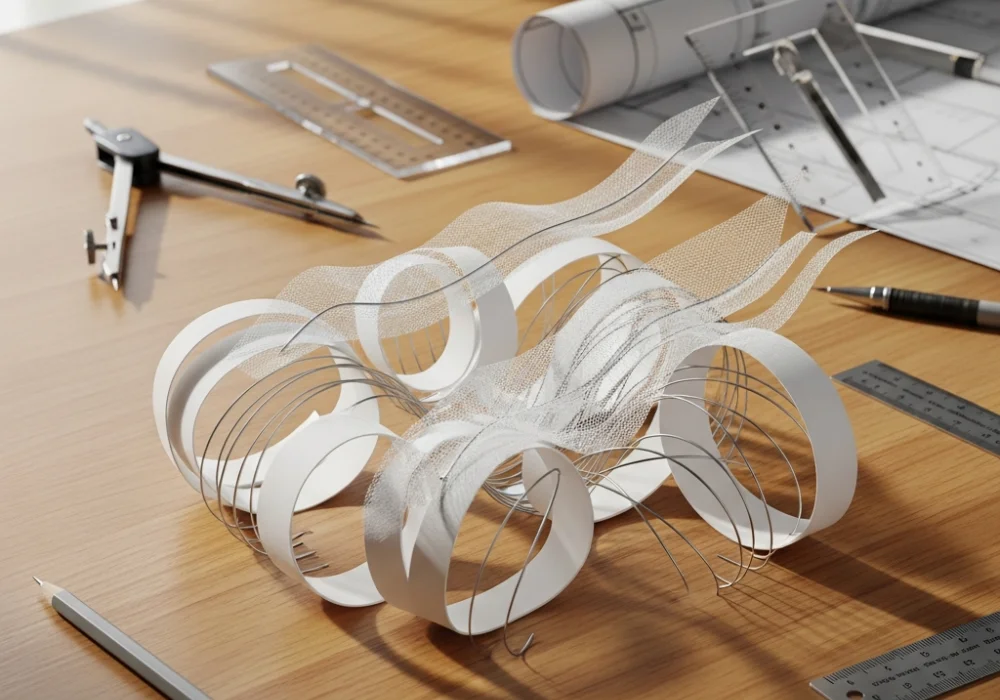
Evaluators at NIFT are not just looking for a neat model; they are looking for a designer’s mind. A ‘literal’ model of a park would include trees and benches. An ‘innovative conceptual’ model might represent the idea of ‘growth’ or ‘tranquility’ through abstract forms and organic shapes. Innovation in this context means manipulating materials in ways that aren’t obvious—turning a flat sheet of paper into a structural lattice or using a piece of wire to represent a digital connection. This level of creativity is what differentiates a top-scoring candidate from the rest.
Comparing Model-Building Approaches
To understand what scores high, let us compare the traditional approach with the innovative approach required for the latest pattern of exams.
| Evaluation Criteria | Standard/Basic Approach | Innovative/Conceptual Approach |
|---|---|---|
| Conceptualization | Directly replicating the prompt (e.g., building a literal chair). | Using metaphors and abstract forms to represent an idea. |
| Material Handling | Using materials in their original state with minimal changes. | Transforming textures (pleating, scoring, weaving) to add depth. |
| Structural Integrity | Over-reliance on tape and glue for support. | Creating self-supporting structures through clever interlocking. |
| Composition | Symmetrical and predictable arrangements. | Dynamic, balanced, and aesthetically challenging layouts. |
| Write-up | Describing the model’s parts. | Explaining the philosophy and design journey. |
Top Strategies for High-Scoring Conceptual Models
- Master the Art of Material Manipulation: Don’t just use a material; transform it. If you are given a piece of thermocol, try not to leave it as a block. Carve it, score it, or peel it. If you have wire, create tension or rhythm.
- Focus on Abstract Storytelling: If the topic is ‘Speed’, think about what speed feels like. Is it sharp edges? Is it a blurred line? Use these feelings to dictate the shapes in your model.
- Optimize Your Time: The two-hour window is tight. Spend the first 15 minutes planning, 90 minutes on the physical model, and the final 15 minutes on the critical concept write-up.
- Integrate the myentrance.in Advantage: Practicing with simulated environments is crucial. The mock tests on myentrance.in provide the necessary practice to manage time and materials effectively, simulating the actual pressure of the exam hall.
The Power of the Concept Note
The write-up is often neglected by students, yet it holds immense weight. This is your chance to explain your innovation to the jury. Instead of writing ‘I made a tree with wire,’ write ‘The twisted wire represents the resilience of nature in an urban landscape.’ Use design terminology like ‘focal point’, ‘balance’, ‘negative space’, and ‘rhythm’ to demonstrate your professional readiness. A well-written note can justify a complex abstract model that might otherwise be misunderstood.
Practice Makes Perfect
Success in the Situation Test comes from muscle memory and creative agility. You should practice with a limited kit—cardboard, copper wire, thread, colorful paper, and cloth—to see how many ways you can combine them. At myentrance.in, we provide specialized modules and feedback mechanisms that help students refine their techniques according to the latest pattern of evaluation.
Frequently Asked Questions (FAQ)
Q1: Can I use extra materials brought from outside?
No, the NIFT Situation Test strictly requires you to use only the materials provided in the kit. Bringing outside materials can lead to disqualification.
Q2: How long should the write-up be?
Generally, a 100 to 150-word write-up is sufficient. It should be concise, focusing on your concept, the materials used, and your design process.
Q3: What if my model is not finished in time?
Evaluators prioritize the ‘concept’ and ‘material handling’ over completion. However, a model that is falling apart or looks very messy will lose marks for aesthetics and neatness.
Q4: How can myentrance.in help with the Situation Test?
myentrance.in offers comprehensive mock tests and study materials tailored for NIFT aspirants, focusing on both the GAT/CAT and the hands-on requirements of the Situation Test.





