
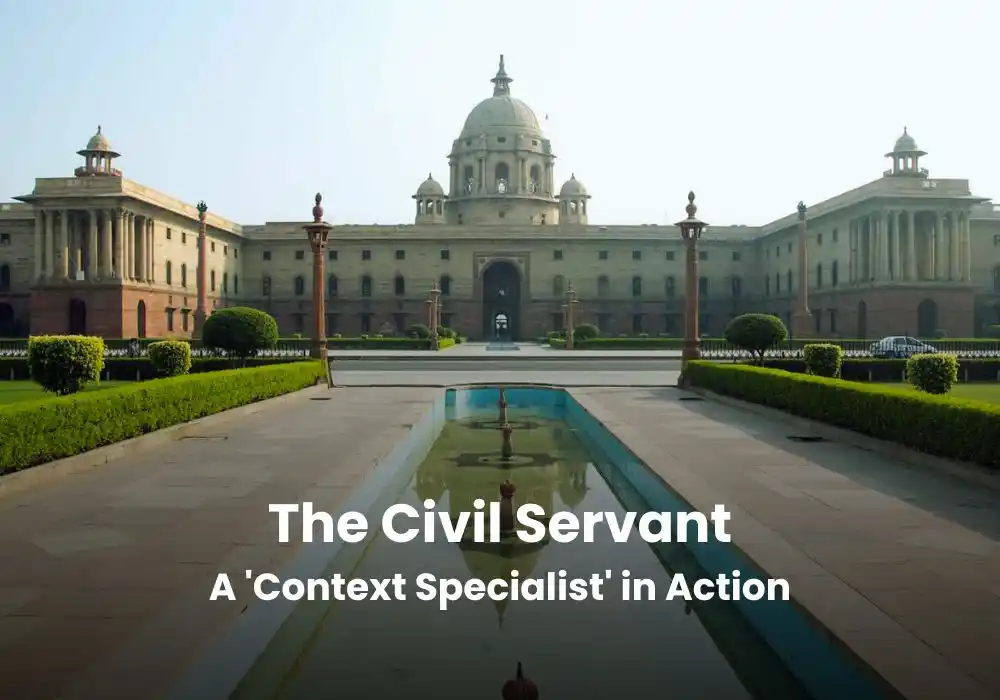
As the Union Public Service Commission (UPSC) proudly marks a century of dedicated service to the nation, it’s a moment to reflect on the profound legacy and future trajectory of India’s administrative backbone. This significant milestone underscores the pivotal role of civil servants, often described as ‘context specialists’ and ‘dot connectors’, in navigating the complexities of governance and driving holistic national development. Understanding this evolving identity is crucial for every aspiring civil servant on their journey with myentrance.in. Our daily news analysis for upsc, ssc, psc provides deep insights into the news.
A Century of Unwavering Commitment: The UPSC’s Legacy
The journey of the Union Public Service Commission is a testament to India’s commitment to meritocracy and good governance. Originating from the recommendations of the Lee Commission in 1924, which led to the establishment of the Public Service Commission, the UPSC has evolved into a cornerstone of the Indian democratic framework. Its constitutional mandate is to conduct examinations for appointment to the services of the Union and to advise on matters related to recruitment and disciplinary issues. For a hundred years, the UPSC has diligently upheld principles of fairness, transparency, and impartiality, ensuring that India’s vast and diverse administrative machinery is staffed by competent, ethical, and dedicated individuals. Its unwavering commitment has provided stability and continuity to governance, playing an instrumental role in nation-building and steering the country through various challenges.
The Civil Servant: A ‘Context Specialist’ in Action
In today’s dynamic administrative landscape, the role of a civil servant extends far beyond merely enforcing rules and regulations. They are, in essence, ‘context specialists’. This means they possess a deep, nuanced understanding of the local socio-economic, cultural, and geographical realities of their postings, whether in a remote district, a bustling metropolis, or a policy-making secretariat. A true context specialist can discern how national policies might uniquely impact different communities, identifying local challenges and opportunities that generic solutions might overlook. They tailor implementation strategies to specific ground conditions, ensuring that public services reach the most deserving and that developmental initiatives resonate with the aspirations of the people. This requires not just administrative acumen but also empathy, extensive fieldwork, and an ability to engage directly with citizens to grasp their true needs and concerns.
Connecting the Dots: The Art of Holistic Governance
The modern civil servant’s effectiveness also lies in their remarkable ability to ‘connect the dots’. Governance rarely operates in silos; issues like poverty, education, healthcare, and environmental sustainability are intricately linked. A civil servant skilled in connecting these dots can foster inter-departmental collaboration, ensuring that initiatives from different ministries or departments complement each other rather than working in isolation. They bridge the gap between policy formulation at the apex level and its practical execution on the ground, integrating diverse stakeholders – from local communities and NGOs to private sector partners – into a cohesive framework for development. This holistic approach allows for the creation of sustainable solutions, anticipating unintended consequences and maximizing the overall positive impact of government efforts. The training imparted at institutions like the Lal Bahadur Shastri National Academy of Administration (LBSNAA) emphasizes developing this comprehensive and integrative perspective, preparing officers to tackle complex, multi-faceted problems.
Why This Perspective Matters for Your Exam Preparation
For aspirants preparing for competitive examinations such as UPSC CSE, SSC, PSC, NID, NIFT, and other government roles, understanding the nuanced role of a civil servant as a ‘context specialist’ and ‘dot connector’ is absolutely critical. This insight moves beyond rote memorization, helping you grasp the *spirit* of public service and the practical application of theoretical knowledge.
* For Prelims: It provides context for questions on constitutional bodies, administrative history, and governance, making factual recall more meaningful.
* For Mains: This understanding is invaluable for crafting insightful answers in General Studies papers (especially GS-II: Governance, GS-III: Economy & Development, and GS-IV: Ethics, Integrity & Aptitude). Essay topics often demand a holistic, empathetic, and administrative perspective, which these concepts directly address. Understanding how policies are implemented at the grassroots level allows for more mature and analytical answers.
* For Interviews: Demonstrating awareness of the multifaceted challenges of public administration, the importance of local context, and the ability to think integratively will set you apart. It shows you understand the true demands of the service you aspire to join.
myentrance.in’s comprehensive resources, including daily news analysis, current affairs quizzes, static GK modules, and interactive examinations, are meticulously designed to cultivate this holistic understanding, preparing you not just to pass the exam but to excel as a future leader.
Essential Knowledge: Sample Questions and Answers
Here are five sample questions based on the themes discussed, vital for your exam preparation:
1. Q: Under which recommendation was the first Public Service Commission in India established, eventually leading to the formation of UPSC?
A: The Public Service Commission in India was established following the recommendations of the Lee Commission (Royal Commission on the Superior Civil Services in India) in 1924.
Importance for Exams: This question tests fundamental historical knowledge about constitutional bodies and administrative reforms, crucial for static GK and polity sections in Prelims for UPSC, SSC, and PSC exams. Understanding the genesis of key institutions helps contextualize their current role in governance.
2. Q: What is the primary role of the Lal Bahadur Shastri National Academy of Administration (LBSNAA) concerning civil servants like IAS officers?
A: LBSNAA’s primary role is to provide foundational training and professional development to officers of the Indian Administrative Service (IAS) and officers of various other Group ‘A’ Central Services. It aims to inculcate a common understanding of governance, public service ethics, and administrative skills.
Importance for Exams: This question is important for General Knowledge, particularly regarding prominent administrative institutions. It also helps aspirants understand the post-selection training process, which can be relevant for interview stages and general awareness in Mains’ Public Administration or Governance papers.
3. Q: In the context of modern governance, what does the term ‘context specialist’ signify for a civil servant?
A: A ‘context specialist’ civil servant is one who possesses a deep understanding of the local socio-economic, cultural, and political landscape of their posting. They can tailor national policies to local realities, anticipate community needs, and resolve issues effectively by considering specific ground-level nuances rather than applying universal solutions indiscriminately.
Importance for Exams: This conceptual question directly relates to the essence of public administration and ethics, making it highly relevant for Mains examinations (GS-II: Governance, GS-IV: Ethics) and essay papers. It tests an aspirant’s analytical thinking and ability to apply theoretical concepts to practical administrative roles.
4. Q: Discuss how civil servants ‘connect the dots’ in multi-sectoral development projects, citing an example.
A: Civil servants ‘connect the dots’ by facilitating inter-departmental coordination, integrating diverse policy objectives, and bringing together various stakeholders (government, private sector, NGOs, local communities) to achieve a common goal. For example, in a rural development project involving sanitation, education, and livelihood generation, a civil servant ensures that health department initiatives (sanitation) align with education department goals (hygiene awareness in schools) and rural development schemes (skill training for women’s self-help groups), creating a holistic impact that wouldn’t be possible in silos.
Importance for Exams: This question delves into practical aspects of governance and public policy implementation, making it critical for Mains GS-II and GS-III papers where inter-sectoral linkages and good governance models are frequently asked. It assesses the ability to provide examples and demonstrate a nuanced understanding of administrative challenges.
5. Q: The UPSC’s role is often described as a ‘watchdog of merit’. Explain this statement in brief.
A: The UPSC acts as a ‘watchdog of merit’ by ensuring a fair, transparent, and merit-based selection process for recruitment to various civil services. Through rigorous examinations and interviews, it safeguards against nepotism and favoritism, upholding the constitutional principles of equality and opportunity. This ensures that only the most competent and deserving candidates are chosen to serve the nation.
Importance for Exams: This question touches upon the constitutional role and integrity of the UPSC, a vital topic for Polity and Governance sections in both Prelims and Mains. It assesses an aspirant’s understanding of the institutional framework and its contribution to democratic values.





